What is Na Yin (Nạp Âm)? The Na Yin Five Elements (Ngũ hành nạp âm) system is a classical acoustic classification that maps the sixty combinations of the Heavenly Stem (thiên can) and Earthly Branch (địa chi) in the sexagenary cycle (can chi) onto thirty specific Five Elements (ngũ hành) images such as Sea Gold (Hải Trung Kim) or Furnace Fire (Lư Trung Hỏa). Two adjacent lunisolar calendar (âm lịch) years in each Yang-Yin pair always share the same Na Yin element.
1. What is Na Yin and which classical principle does it come from?
Na Yin is the thirty-image natal element classification derived from pairing the ancient five-tone musical scale with the twelve pitch pipes across the sixty-year sexagenary cycle. When looking up a lunar birth year, readers often hear three-word names such as Great Forest Wood (Đại Lâm Mộc), Ravine Water (Giản Hạ Thủy), or City-Wall Earth (Thành Đầu Thổ). Those three-word names represent the natal Na Yin Five Elements attached to each person's birth year.
Within Five Elements and birth-year element studies, "Nap" means to absorb or gather, while "Am" means sound or resonant frequency. Classical scholars observed that when a Heavenly Stem combines with an Earthly Branch, their cyclic interaction produces a distinct acoustic tone.
Combining the Five Tones, the Twelve Pitch Pipes, and 30 natural images
In ancient music theory, the five pentatonic notes known as the Five Tones (Gong, Shang, Jue, Zhi, and Yu) combine with the twelve pitch pipes (Twelve Pitch Standard) to form sixty tonal steps matching the sixty stem-branch pairs. Because each consecutive Yang and Yin year pair shares the same base acoustic frequency, the sixty years condense into thirty Na Yin element identities.
Speaking only of generic Metal, Wood, Water, Fire, or Earth does not capture the full diversity of nature. Therefore, each element is divided into six Na Yin forms (5 elements multiplied by 6 forms equals 30 Na Yin elements), where the first two words describe the specific physical state and location of that element.
2. How do the Na Yin Five Elements differ from the intrinsic Five Elements of Stems and Branches?
The intrinsic Five Elements assign a fixed, standalone element to each individual Heavenly Stem and Earthly Branch, whereas the Na Yin Five Elements represent the synthesized compound element formed when a stem and branch unite into a year pillar. Beginners often wonder why the Jia Zi year has a Jia stem (Wood) and a Zi branch (Water), yet its birth-year element is Sea Gold (Metal).
Standalone stem-branch elements versus the synthesized compound of a stem-branch pair
In the traditional Heavenly Stems and Earthly Branches system, each character carries a fixed element: Jia and Yi belong to Wood, Bing and Ding belong to Fire, Wu and Ji belong to Earth, Geng and Xin belong to Metal, and Ren and Gui belong to Water. Similarly, the Earthly Branches Yin and Mao belong to Wood, Si and Wu belong to Fire, Shen and You belong to Metal, Hai and Zi belong to Water, and Chen, Xu, Chou, and Wei belong to Earth.
When a Heavenly Stem joins with an Earthly Branch to form a year pillar, the two components interact to create a new compound quality called Na Yin. In Purple Star Astrology (Tử Vi Đẩu Số), when comparing the natal element with the Five-Element Bureau (Ngũ hành cục) on a Zi Wei chart (lá số Tử Vi), classical texts always take the birth year's Na Yin Five Elements as the standard.
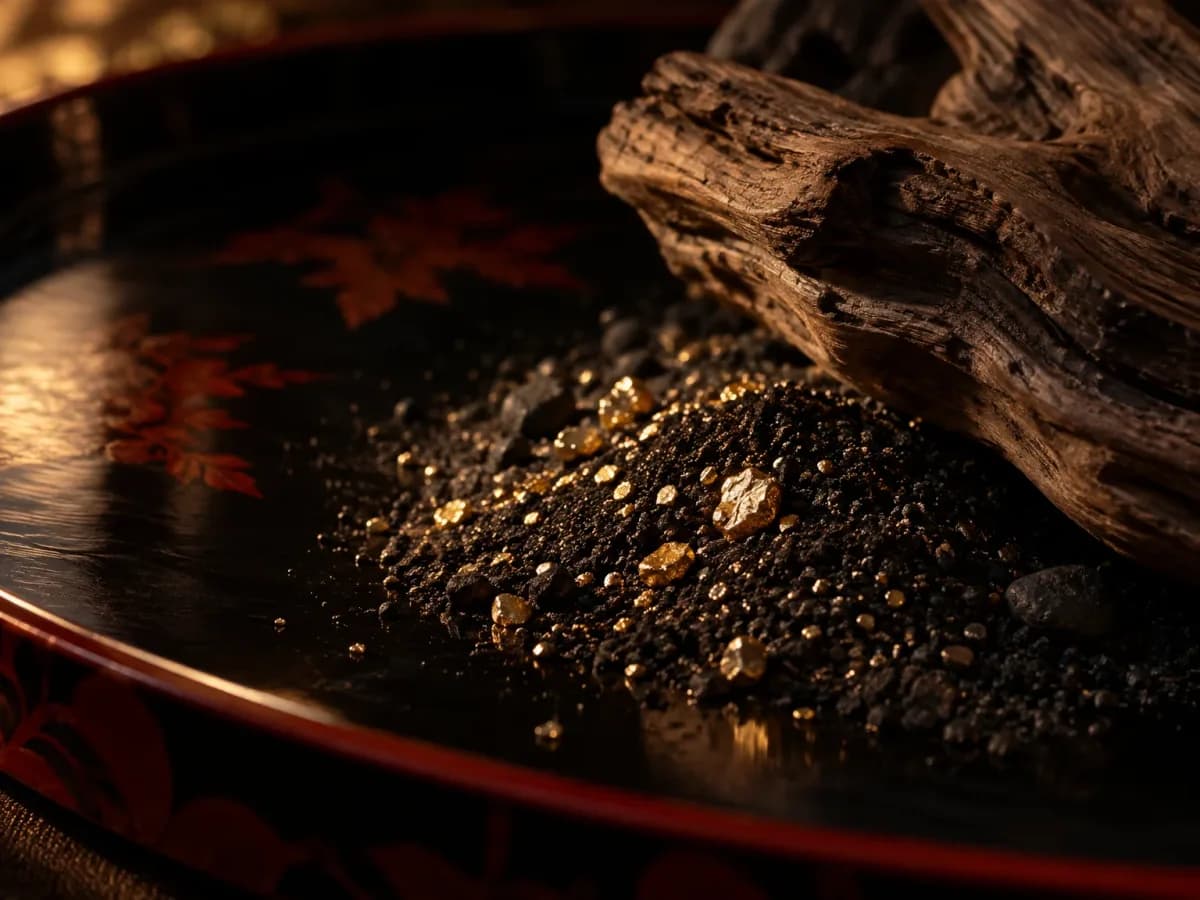
Each Na Yin element borrows a concrete natural image, such as gold grains in sand or pine and cypress timber, to express the distinct nuance of its Five Element category.
3. What are the 30 Na Yin Five Elements across the 60-year sexagenary cycle?
The sixty-year sexagenary cycle begins with Jia Zi and Yi Chou (Sea Gold) and concludes with Ren Xu and Gui Hai (Great Sea Water). The table below lists all thirty Na Yin Five Elements in canonical order according to traditional Vietnamese calendar science.
| No. | Stem-Branch Pair | Na Yin Name | Meaning | Element | Birth Years |
|---|---|---|---|---|---|
| 1 | Jia Zi and Yi Chou | Sea Gold (Hải Trung Kim) | Gold in the sea | Metal | 1984, 1985 |
| 2 | Bing Yin and Ding Mao | Furnace Fire (Lư Trung Hỏa) | Fire in a furnace | Fire | 1986, 1987 |
| 3 | Wu Chen and Ji Si | Great Forest Wood (Đại Lâm Mộc) | Old forest timber | Wood | 1988, 1989 |
| 4 | Geng Wu and Xin Wei | Roadside Earth (Lộ Bàng Thổ) | Soil beside a road | Earth | 1990, 1991 |
| 5 | Ren Shen and Gui You | Sword-Edge Metal (Kiếm Phong Kim) | Steel at a sword tip | Metal | 1992, 1993 |
| 6 | Jia Xu and Yi Hai | Mountain-Top Fire (Sơn Đầu Hỏa) | Fire atop a mountain | Fire | 1994, 1995 |
| 7 | Bing Zi and Ding Chou | Ravine Water (Giản Hạ Thủy) | Water in a valley brook | Water | 1996, 1997 |
| 8 | Wu Yin and Ji Mao | City-Wall Earth (Thành Đầu Thổ) | Earth of a city rampart | Earth | 1998, 1999 |
| 9 | Geng Chen and Xin Si | White Wax Metal (Bạch Lạp Kim) | Molten candlestick metal | Metal | 2000, 2001 |
| 10 | Ren Wu and Gui Wei | Willow Wood (Dương Liễu Mộc) | Timber of a willow tree | Wood | 2002, 2003 |
| 11 | Jia Shen and Yi You | Spring Water (Tuyền Trung Thủy) | Water in a clear spring | Water | 2004, 2005 |
| 12 | Bing Xu and Ding Hai | Rooftop Earth (Ốc Thượng Thổ) | Clay tiles on a roof | Earth | 2006, 2007 |
| 13 | Wu Zi and Ji Chou | Thunderbolt Fire (Tích Lịch Hỏa) | Lightning fire | Fire | 2008, 2009 |
| 14 | Geng Yin and Xin Mao | Pine and Cypress Wood (Tùng Bách Mộc) | Pine and cypress timber | Wood | 1950, 2010, 2011 |
| 15 | Ren Chen and Gui Si | Long-Flowing Water (Trường Lưu Thủy) | Water of a long river | Water | 1952, 2012, 2013 |
| 16 | Jia Wu and Yi Wei | Sand Gold (Sa Trung Kim) | Gold mixed in sand | Metal | 1954, 2014, 2015 |
| 17 | Bing Shen and Ding You | Mountain-Foot Fire (Sơn Hạ Hỏa) | Fire at a mountain base | Fire | 1956, 2016, 2017 |
| 18 | Wu Xu and Ji Hai | Flatland Wood (Bình Địa Mộc) | Trees on open plains | Wood | 1958, 2018, 2019 |
| 19 | Geng Zi and Xin Chou | Wall Earth (Bích Thượng Thổ) | Earth on house walls | Earth | 1960, 2020, 2021 |
| 20 | Ren Yin and Gui Mao | Gold Foil Metal (Kim Bạch Kim) | Refined gold leaf | Metal | 1962, 2022, 2023 |
| 21 | Jia Chen and Yi Si | Lamp Fire (Phú Đăng Hỏa) | Flame of an oil lamp | Fire | 1964, 2024, 2025 |
| 22 | Bing Wu and Ding Wei | Heavenly River Water (Thiên Hà Thủy) | Rainwater from the sky | Water | 1966, 2026, 2027 |
| 23 | Wu Shen and Ji You | Great Marsh Earth (Đại Trạch Thổ) | Soil of a wide marsh | Earth | 1968, 2028, 2029 |
| 24 | Geng Xu and Xin Hai | Hairpin and Bracelet Gold (Thoa Xuyến Kim) | Gold jewelry ornaments | Metal | 1970, 2030, 2031 |
| 25 | Ren Zi and Gui Chou | Mulberry Wood (Tang Đố Mộc) | Timber of a mulberry tree | Wood | 1972, 2032, 2033 |
| 26 | Jia Yin and Yi Mao | Great Stream Water (Đại Khê Thủy) | Water of a great stream | Water | 1974, 2034, 2035 |
| 27 | Bing Chen and Ding Si | Sand Earth (Sa Trung Thổ) | Soil mixed with sand | Earth | 1976, 2036, 2037 |
| 28 | Wu Wu and Ji Wei | Heavenly Fire (Thiên Thượng Hỏa) | Radiant fire in the sky | Fire | 1978, 2038, 2039 |
| 29 | Geng Shen and Xin You | Pomegranate Wood (Thạch Lựu Mộc) | Pomegranate tree wood | Wood | 1980, 2040, 2041 |
| 30 | Ren Xu and Gui Hai | Great Sea Water (Đại Hải Thủy) | Water of the great ocean | Water | 1982, 2042, 2043 |
The 30-year symmetry rule across the sexagenary table
Two opposing stem-branch pairs spaced exactly thirty years apart (such as Jia Zi and Jia Wu, or Bing Yin and Bing Shen) always share the exact same core Na Yin element. Thanks to this symmetry between the first fifteen pairs and the second fifteen pairs, memorizing the first half immediately gives you the core elements of the second half.
4. How can you quickly calculate the Na Yin element of any birth year?
When you do not have a lookup table on hand, you can calculate the Na Yin element of any birth year using either a direct modulo-60 Gregorian year formula or traditional finger-joint point addition. Both methods give exact results for every year in the sixty-year cycle.
Direct Gregorian year formula and traditional finger-counting points
In calendrical mathematics, the year 4 CE is a Jia Zi year (index 0). Take (Gregorian_year - 4) modulo 60 to get a remainder from 0 to 59, then divide by 2 and take the integer floor to obtain an index from 0 to 29 corresponding to rows 1 through 30 in the Na Yin table.
Alternatively, using the traditional finger-counting mnemonic, assign Heavenly Stem points: Jia and Yi equal 1, Bing and Ding equal 2, Wu and Ji equal 3, Geng and Xin equal 4, and Ren and Gui equal 5. Add the Earthly Branch points (Zi, Chou, Wu, Wei equal 0; Yin, Mao, Shen, You equal 1; Chen, Si, Xu, Hai equal 2); if the total exceeds 5, subtract 5, and the remainder maps to 1 = Metal, 2 = Water, 3 = Fire, 4 = Earth, and 5 = Wood.
> Note: When checking the Na Yin element for someone born in January or the first half of February on the Gregorian calendar, verify whether the birthday falls before or after Lunar New Year's Day (Tết). If born before Lunar New Year, use the stem-branch pair and Na Yin element of the previous lunar year.
5. How are the Na Yin Five Elements applied in compatibility and Zi Wei chart reading?
Knowing your specific Na Yin element helps you understand your personal temperament and how to collaborate harmoniously with your surroundings. Combined with the Five Elements generation and control laws, the thirty Na Yin forms paint a much richer picture than comparing five generic elements alone.
Distinguishing nuanced element interactions and the role of Na Yin on a Zi Wei chart
For example, someone with a Water element by birth year belonging to Heavenly River Water (Thiên Hà Thủy: 1966, 1967, 2026, 2027) represents rainwater falling from high clouds, so terrestrial soil (Earth) does not block it. Similarly, someone with a Metal element by birth year belonging to Sword-Edge Metal (Kiếm Phong Kim: 1992, 1993) benefits from meeting Furnace Fire (1986, 1987), as kiln fire tempers steel into a sharp blade.
In Zi Wei Dou Shu, the birth year's Na Yin element sits at the center of the chart to be compared with the Five-Element Bureau, the Life Palace (cung Mệnh) element, and residing major star (chính tinh) placements. To understand your career or family dynamics in depth, combine your birth-year Na Yin element with all twelve functional palaces based on your exact birth date and hour.
Key points
- The Na Yin Five Elements system maps 60 stem-branch pairs onto 30 specific natural images across the 5 elements.
- Every 2 consecutive lunar years (one Yang, one Yin) share 1 Na Yin element.
- Each element (Metal, Wood, Water, Fire, Earth) has exactly 6 distinct Na Yin forms.
- In Zi Wei Dou Shu, the natal Na Yin element is compared against the Five-Element Bureau and major stars.
Want to see how your birth-year Na Yin element interacts with your Five-Element Bureau and twelve functional palaces? You can generate a free personal Zi Wei chart to view a complete analysis based on your birth date and hour.
Frequently asked questions
Why do two consecutive birth years share the exact same Na Yin element?
In the 60-year sexagenary table, each adjacent pair consists of one Yang year and one Yin year (such as Jia Zi and Yi Chou) occupying the same acoustic pairing position on the Five Tones and Twelve Pitch Pipes scale, uniting both years under one Na Yin element.
Is the Na Yin birth-year element the same as the Eight Mansions trigram element?
No, they are different. The Na Yin element depends solely on the lunar birth year, so men and women born in the same lunar year share the same Na Yin element, whereas the Eight Mansions trigram depends on both birth year and gender.
Which Na Yin element governs the years 2026 and 2027?
Both the Bing Wu year 2026 and the Ding Wei year 2027 belong to Heavenly River Water, meaning rainwater falling from the sky with an open, refreshing, and nourishing character.
Is it favorable for two people with the same Na Yin element to partner together?
Two people sharing the same Na Yin element often have similar life rhythms. With strong, decisive Na Yin forms such as Sword-Edge Metal or Thunderbolt Fire (Tích Lịch Hỏa), partners simply need to practice patient listening and mutual accommodation during discussions.
Sources
- Wan Minying (Vạn Dân Anh), San Ming Tong Hui (Compendium of the Three Fates, Tam Mệnh Thông Hội), Book 1: Treatise on the origin of the Sixty Sexagenary Na Yin Elements and the character of the 30 forms.
- Li Xuzhong (Lý Hư Trung), Li Xuzhong Ming Shu (Book of Fate by Li Xuzhong, Lý Hư Trung Mệnh Thư): Method for analyzing Na Yin Five Elements in classical destiny study.
- Vân Đằng Thái Thứ Lang, Tử Vi Đẩu Số Tân Biên (New Compendium of Zi Wei Dou Shu): Sexagenary lookup tables and rules comparing the natal element with the Five-Element Bureau.