Where should you begin when opening a Zi Wei chart?
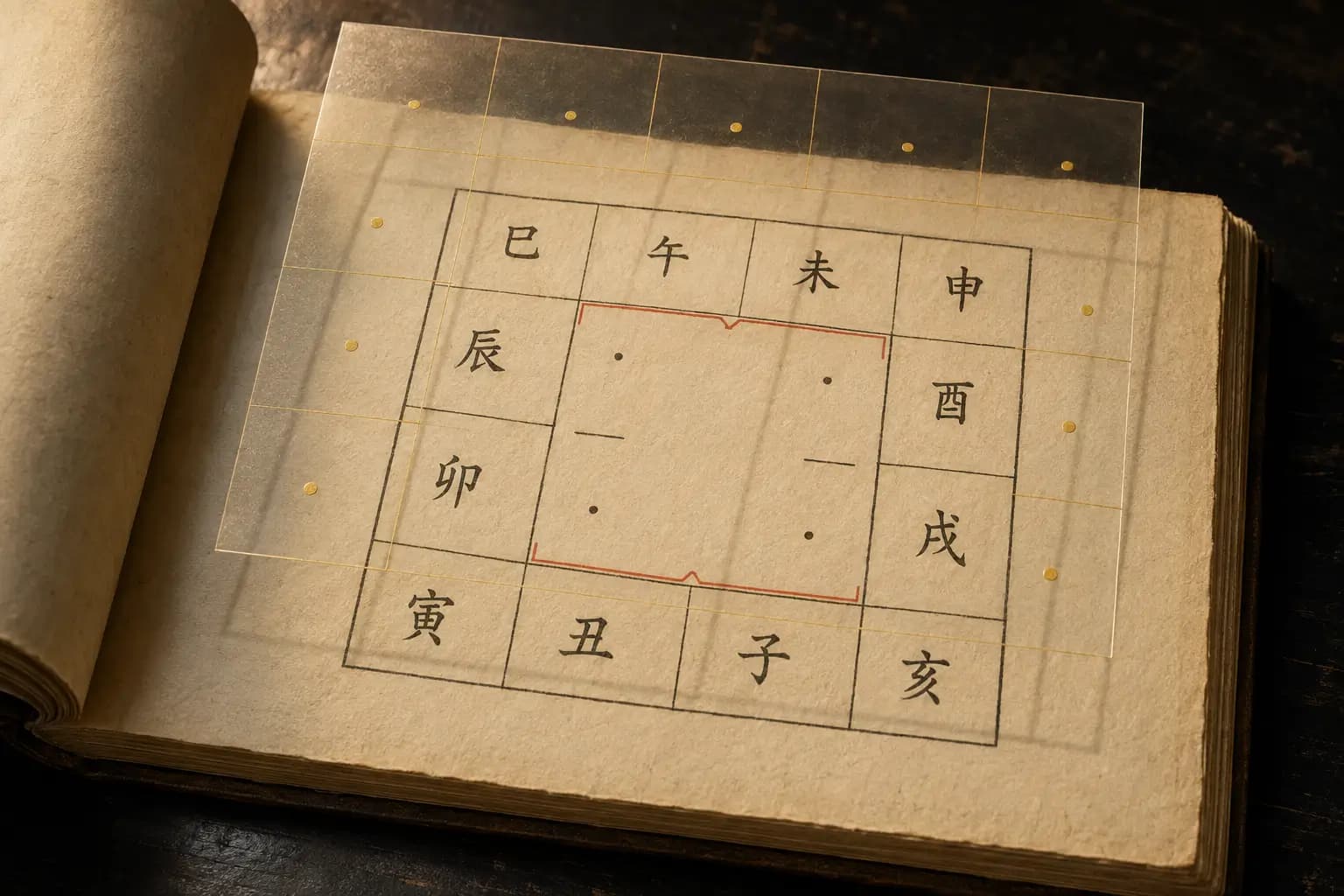
Every structured reading in Purple Star Astrology (Tử Vi Đẩu Số) begins at the central Heaven Plate rather than the outer cells. Here you compare your birth-year Na Yin Five Elements against the chart's Five-Element Bureau and note where Zi Wei (Tử Vi) and the Body Palace land. When the Bureau element generates or harmonizes with the natal element, classical manuals note smoother environmental alignment; when the Bureau restrains the natal element, resilience often develops through hands-on problem solving. Review these foundations in Life Palace, Body Palace, and Bureau explained and what Mệnh, Cục, and Thân mean.
Next, scan all twelve cells at a glance to notice overall distribution: whether major stars cluster tightly or spread evenly, and which of the six eligible domains hosts the Body Palace (Life, Fortune, Career, Travel, Wealth, or Spouse). Writing down three structural observations before reading minor stars keeps your perspective balanced.
| Reading order | Area inspected on chart | Core question answered |
|---|---|---|
| Step 1: Heaven Plate | Center panel (sexagenary cycle, Na Yin, Bureau) | How do natal element and Five-Element Bureau interact, and when does Decade 1 start? |
| Step 2: Core axis | Life Palace, Body Palace, and their trine/opposing cells | Does temperament lean toward steady governance, analytical strategy, or pioneering change? |
| Step 3: Topical palace | Domain cell (Career, Wealth, Spouse, Property...) | What working style, financial rhythm, or relationship dynamic do the stars suggest? |
| Step 4: Modifiers | Four Transformations (Hua Lu, Hua Quan, Hua Ke, Hua Ji) | Where does momentum gather naturally, and where does mental friction concentrate? |
| Step 5: Timing layers | Active ten-year decade cycle and annual transit | Which themes on the natal chart are highlighted during the current period? |
How do you read the Life Palace properly?
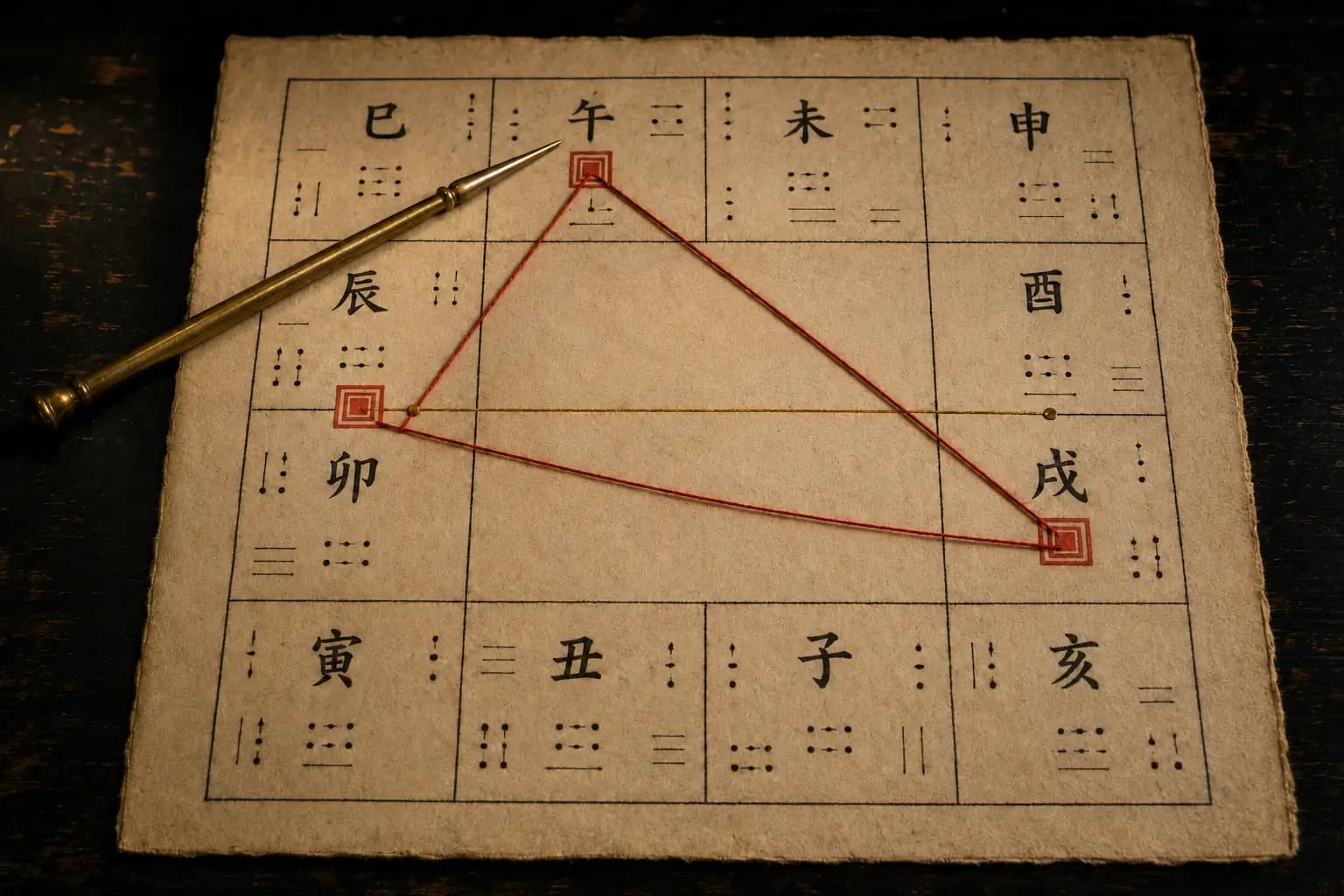
Open the Life Palace by identifying its resident major stars and their brightness rating at that Earthly Branch: Temple and Prosperous indicate constructive expression with natural support; Gained and Neutral indicate steady capability that matures with effort; Fallen signals traits that require conscious pacing or support from allies. When the Life Palace holds no major stars, read its auxiliary stars alongside the opposing Travel Palace and trine Career and Wealth Palaces.
Only after weighing the major stars should you layer in auxiliary pairs. A Life Palace holding Zi Wei or Tian Fu supported by Zuo Fu, You Bi, Wen Chang, and Wen Qu operates very differently from the same star accompanied by Di Kong, Di Jie, Qing Yang, or Tuo Luo. Reading Life, Career, Wealth, and Travel as one connected quartet reveals how inner disposition translates into work and public action.
Do auspicious and challenging stars dictate fixed outcomes?
Classical texts group stars into supportive and challenging categories as a mnemonic aid, yet equating supportive stars with effortless success or challenging stars with misfortune leads beginners astray. Placed at Temple or Prosperous brightness, Qi Sha or Qing Yang frequently describes technical rigor, decisive leadership under pressure, and persistence; conversely, gentle stars such as Tian Tong or Tai Yin without active drive can lean toward hesitation.
Context and balance matter more than labels. You can review every major star's temperament and classic combinations in 14 major stars in Purple Star Astrology before mapping them back onto your own palaces.
How do you read a topical palace for a specific question?
Each everyday question maps to a dedicated palace network: vocational choices center on the Career Palace read with the Wealth and Life Palaces; housing and long-term savings center on the Property Palace read with the opposing Children Palace and Fortune Palace; committed partnerships center on the Spouse Palace read alongside the Fortune, Career, and Travel Palaces. All twelve domains are outlined in 12 palaces in a Zi Wei chart.
Always reconcile topical findings with the Life Palace. If the Wealth Palace shows fast-moving entrepreneurial stars while the Life Palace favors methodical research, sustainable plans usually pair deep specialist expertise with structured partnerships rather than forcing an impulsive style.
When should you bring in decade cycles and annual transits?
Introduce timing layers — the ten-year decade cycle, annual minor cycle, and annual transit — only after understanding the natal chart. Classical teachers compare the natal chart to the hull of a vessel and each decade cycle to the river current through which it sails: a sturdy vessel navigates rough water by slowing down and preparing early.
See how ten-year and annual periods move across the grid in decade cycles and annual minor cycles.
What common mistakes should beginners avoid?
Four pitfalls trip up new readers most often: searching alarming classical aphorisms out of context; judging one cell while ignoring its Three Harmonies and Four Cardinal Positions; forgetting to verify whether birth hour is exact or provisional; and mistaking psychological tendencies for predetermined future events.
Treat every chart reading as a structured prompt for reflection. You can build your own Zi Wei chart for free or inspect our sample Zi Wei report to see how palaces, stars, and cycles connect step by step.