Element-compatible colors (màu hợp mệnh) form a traditional classification system that maps natural color palettes onto the Five Elements (ngũ hành) of Metal, Wood, Water, Fire, and Earth, based on the principles of mutual generation and elemental harmony. Selecting a well-proportioned palette for everyday clothing and home interiors promotes visual balance and calm focus throughout the day.
1. What classical principles govern choosing element-compatible colors under the Five Elements?
In traditional East Asian aesthetics and calendrical philosophy, choosing element-compatible colors rests on correlating each of the Five Elements with a cardinal direction, a season of the year, and a characteristic color spectrum observed in nature. Classical scholars observed the fresh green of spring forests, the crimson glow of summer fire, the ochre yellow of central soil, the metallic white of autumn frost, and the deep indigo of winter waters to establish the traditional Five Colors system.
When exploring Five Elements and birth-year element studies, you will see that color selection follows four distinct tiers of interaction around the generating and restraining cycle.
The four color tiers viewed from your natal element
When taking your birth-year Na Yin Five Elements (Ngũ hành nạp âm) natal chart (bản mệnh) identity on the lunisolar calendar (âm lịch) as the anchor point, surrounding colors fall into four functional groups. The first group consists of Generating Colors (Incoming Generation): shades belonging to the element that nourishes and gives rise to your own element (such as Earth generating Metal, or Water generating Wood), acting as a steady source of support.
The second group consists of Natal Element Colors (Elemental Harmony): shades belonging directly to your own birth element, which reinforce inner stability and personal presence. The third group consists of Outgoing Generation Colors: shades belonging to the element that your natal element produces, best used as gentle accents to release excess intensity when your natal element is overly strong.
The fourth group consists of Controlled and Restraining Colors: shades of the element that your natal element controls (Outgoing Restraint) and shades of the element that controls your natal element (Incoming Restraint). In architectural and interior design, practitioners avoid using Incoming Restraint colors across large background surfaces such as walls or floors so the room does not feel visually heavy.
Practical value from the perspective of environmental psychology
Modern visual science and environmental psychology confirm that the light wavelengths of different color families directly influence human concentration, heart rate, and emotional comfort. The balancing guidelines found in the Five Elements laws of mutual generation and restraint align closely with contemporary color theory, helping households create restful, well-proportioned living spaces.
2. What are the generating, harmonious, and restraining colors in the 5-element lookup table?
To look up your compatible palette accurately, first identify which of the five phases (Metal, Wood, Water, Fire, or Earth) governs your lunisolar birth year in the sexagenary cycle (can chi), and then consult the corresponding row in the reference table below.
| Natal Element | Generating Colors (Priority 1) | Natal Element Colors (Priority 2) | Outgoing & Controlled Colors (Accents) | Restraining Colors (Limit on Large Surfaces) |
|---|---|---|---|---|
| Metal Element | Earthy yellow, cream yellow, warm beige, light brown (Earth) | Ivory white, silver-gray, light slate, metallic sheen (Metal) | Soft sky blue, indigo blue; Pale leaf green | Glaring red, harsh orange, deep magenta, dark purple (Fire) |
| Wood Element | Ocean blue, indigo blue, muted charcoal black (Water) | Leaf green, moss green, young rice green, jade green (Wood) | Terracotta red, warm pink; Cream yellow, beige | Cold stark white, high-gloss metallic gray (Metal) |
| Water Element | Crisp white, ivory white, silver-gray, pale gray (Metal) | Sky blue, navy blue, indigo blue, ink black (Water) | Soft leaf green, moss green; Muted crimson | Deep ochre yellow, heavy earth brown, dark terracotta (Earth) |
| Fire Element | Leaf green, moss green, emerald green (Wood) | Vermilion red, brick red, warm orange, muted rose, purple (Fire) | Cream yellow, warm brown, beige; Ivory white | Jet black, deep ocean blue across large surfaces (Water) |
| Earth Element | Brick red, terracotta orange, warm pink, muted purple (Fire) | Ochre yellow, cream yellow, wood brown, ceramic brown, beige (Earth) | Ivory white, light slate gray, silver-gray | Heavy dark forest green across oversized areas (Wood) |
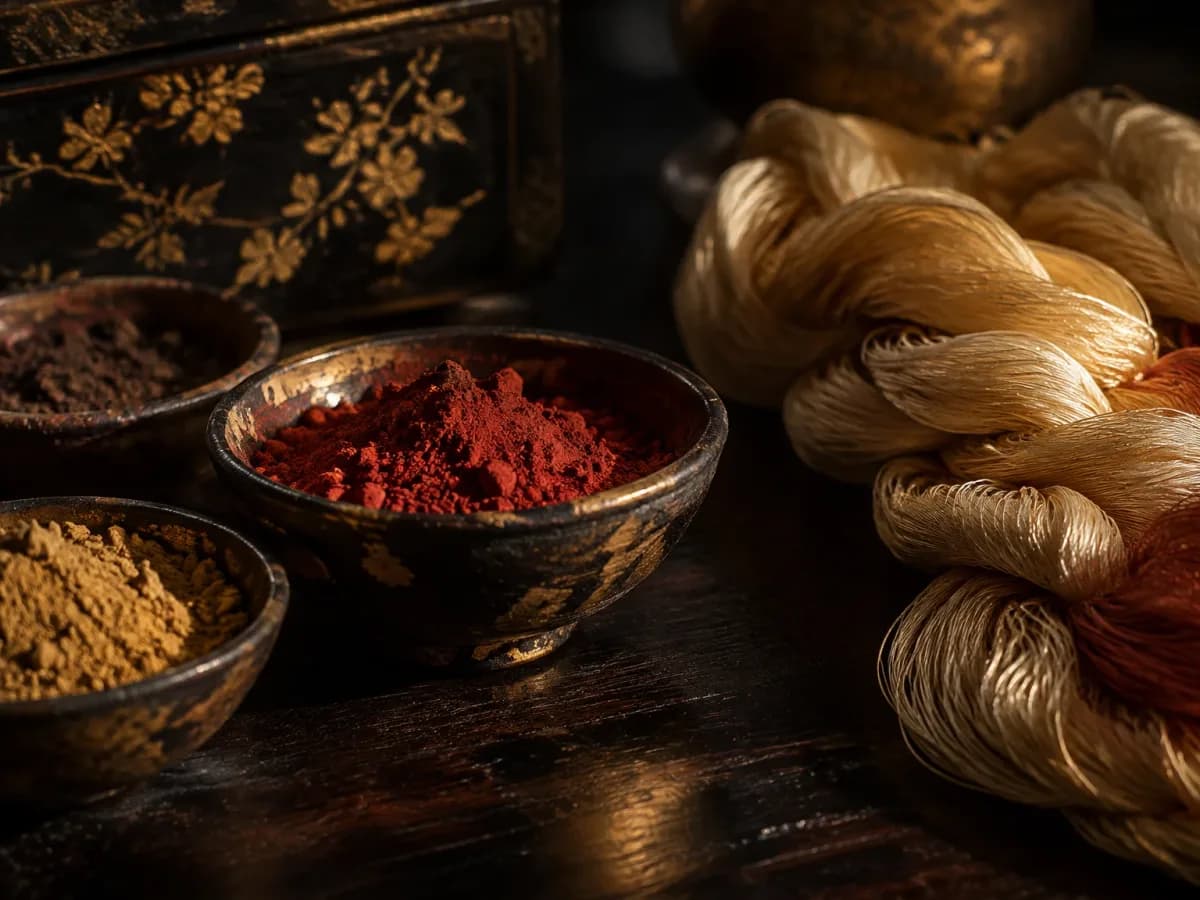
Natural pigments derived from minerals and botanical dyes carry a warm, muted depth that blends effortlessly into everyday clothing and interior architecture.
Understanding the natural color spectrum of each element in daily life
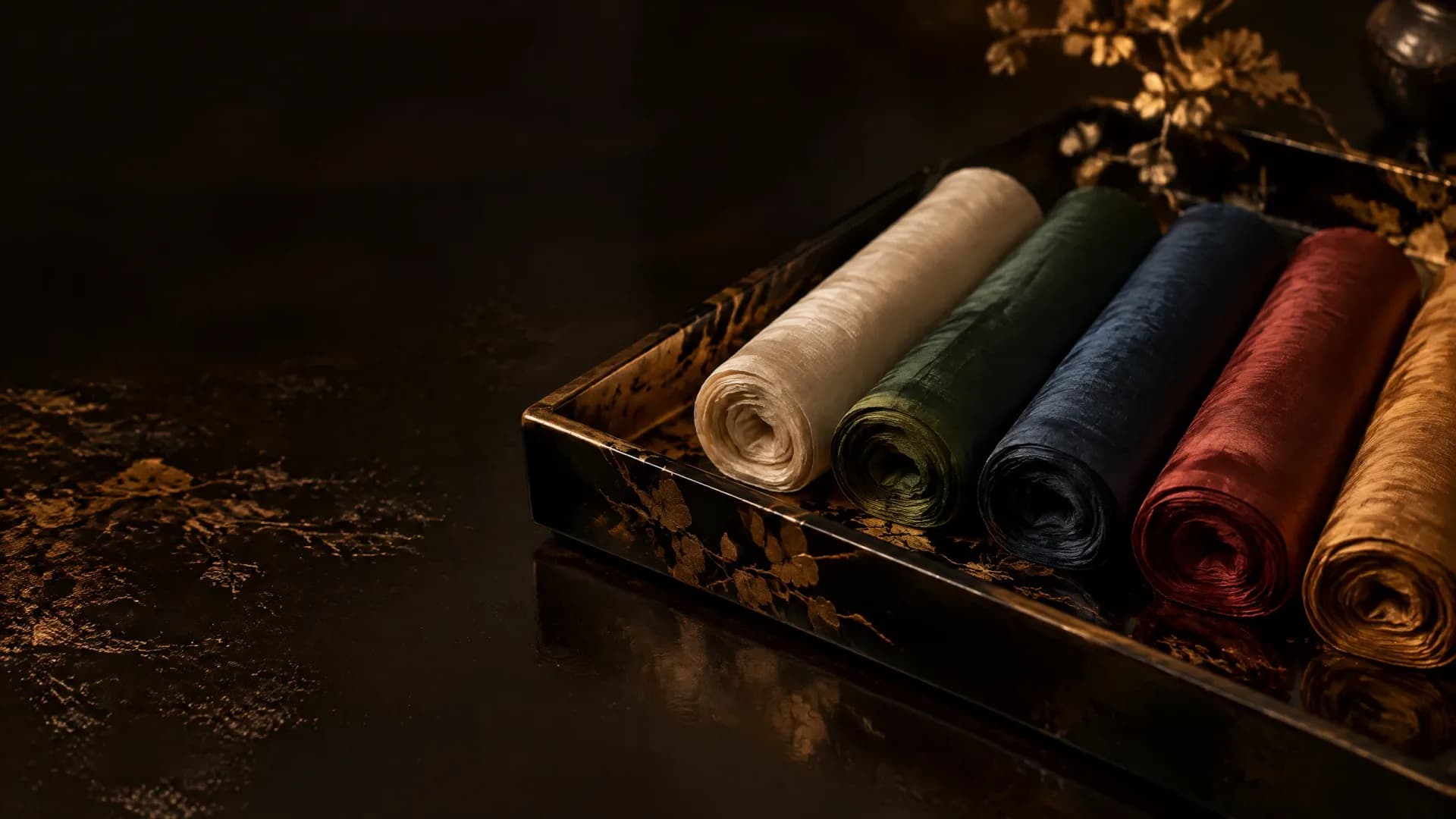
For the Metal element, representative shades range from the warm ivory white of raw silk and tailored silver-gray to soft brushed bronze. For the Wood element, the natural palette spans from tender spring green and bamboo leaf green to tranquil, grounded moss tones.
The Water element encompasses everything from pale morning sky blue, ocean blue, and traditional indigo-dyed fabric to deep lacquer black. The Fire element looks most timeless when expressed through vermilion, kilned brick red, dusty rose, or amber orange, whereas the Earth element embraces warm neutral tones such as loess yellow, soft beige, and unglazed stoneware brown.
3. How do you apply the 60 - 30 - 10 rule to coordinate wardrobe and interior colors?
The most effective way to apply Five Elements colors without overwhelming a room or outfit is to combine elemental palettes with the classic 60% - 30% - 10% design proportion. A common mistake when reading Five Elements color charts is painting an entire room or dressing head-to-toe in a single saturated hue.
60% dominant color (soft neutral background tones)
Sixty percent of the visual area, such as main walls, ceilings, or a primary tailored suit or coat, should be reserved for soft, breathable neutral tones. If you carry the characteristics of Metal element individuals or belong to the Water element, ivory white, warm cream, or pale dove gray serves as an ideal 60% foundation.
If you belong to the Wood, Fire, or Earth element, your 60% background layer can use warm beige, creamy off-white tinted with pale ochre, or a very soft sage pastel. Keeping the primary 60% backdrop light makes living spaces feel airy and creates a calm canvas that lets furniture and textures stand out.
30% secondary color and 10% expressive accent color
The next thirty percent of the visual composition, such as curtains, sofas, cabinetry, shirts, or skirts, is the ideal place to introduce your Natal Element Colors, such as natural timber furniture and moss-green drapery for a Wood native, or a navy-blue sofa for a Water native. The final ten percent, including throw pillows, ceramic vases, wall art, scarves, or ties, belongs to saturated accent shades like vermilion red, amber orange, or emerald green that enliven the space without causing visual fatigue.
4. Why do different Na Yin subtypes within the same element prefer different color intensities?
Different Na Yin subtypes within the same element prefer different color intensities because each of the five phases is further divided into six distinct physical states with their own strength and temperament. If you have read our guide on what Na Yin is and the full table of 30 Na Yin elements, you know that fine-tuning color saturation by your specific Na Yin subtype produces much more natural results.
Fine-tuning color saturation according to flourishing or gentle Na Yin states
For instance, within the Fire phase, individuals born under Mountain-Top Fire (Sơn Đầu Hỏa: 1994, 1995) or Heavenly Fire (Thiên Thượng Hỏa: 1978, 1979) already carry expansive, radiant heat, so they benefit from generous amounts of soothing leaf green (Wood) and warm cream-beige (Earth) to moderate their pace. Conversely, those born under Lamp Fire (Phú Đăng Hỏa: 1964, 1965, 2024, 2025, the sheltered flame of an oil lamp) harmonize wonderfully with warm terracotta and amber accents.
Similarly, for individuals born under Sword-Edge Metal (Kiếm Phong Kim: 1992, 1993) or Great Forest Wood (Đại Lâm Mộc: 1988, 1989), whose natal Na Yin foundation is exceptionally sturdy, adding a crisp contrasting accent against a silver-gray wall or solid timber desk creates a refined, energetic focal point.
> Note: Color coordination in clothing and architecture is a practical tool for visual comfort and psychological focus, not a mystical shortcut that alters destiny on its own. Always prioritize breathable fabrics, non-toxic low-VOC wall paints, and tones appropriate for your professional setting.
5. How do you combine birth-year element colors with your personal Zi Wei chart structure?
In Purple Star Astrology (Tử Vi Đẩu Số), personalizing your living environment and wardrobe goes beyond the birth-year element by also consulting the elemental branch of your Property Palace (cung Điền Trạch), your Life Palace (cung Mệnh), and the residing major star (chính tinh) placements on your Zi Wei chart (lá số Tử Vi).
Examining the Five Element of the Property Palace and Life Palace major stars
On a Zi Wei chart, the Property Palace directly reflects your home environment and architectural style. If your birth year belongs to the Water element and your Property Palace sits at the Mao branch (intrinsic Wood) holding Tian Ji (Thiên Cơ) or Tai Yin (Thái Âm), your home will feel especially inviting when designed around a leafy garden courtyard, natural wood finishes, and diffused daylight.
At the same time, the major stars residing in your Life Palace express distinct aesthetic preferences: individuals with Tai Yang (Thái Dương) or Lian Zhen (Liêm Trinh) in the Life Palace often gravitate toward crisp tailoring and warm, structured contrasts. Meanwhile, those with Tai Yin, Tian Tong (Thiên Đồng), or the auxiliary star Wen Qu (Văn Khúc) in the Life Palace feel most at ease in serene pastel palettes and soft natural textiles such as raw silk and linen.
Key points
- Element-compatible colors map onto the 5 phases: Metal (white/gray), Wood (green), Water (blue/black), Fire (red/orange), and Earth (yellow/brown).
- Prioritize Generating Colors (which nourish your natal element) and Natal Element Colors (which reinforce harmony).
- Coordinate interiors and outfits using the balanced 60% background, 30% secondary, and 10% accent ratio.
- Favor muted, natural mineral and botanical tones to keep everyday living spaces restful on the eyes.
Want to discover which elements govern the Life Palace and Property Palace on your personal chart alongside your birth-year Na Yin element? You can generate a free personal Zi Wei chart to check your exact structure by birth date and hour.
Frequently asked questions
What colors should a married couple with different birth elements choose for house paint and furniture?
The most harmonious solution is to select a bridging element (an element that mediates between both spouses' elements in the generation cycle) or use a neutral 60% background such as warm cream or soft beige. For example, if one spouse belongs to Water and the other belongs to Fire, natural wood furniture and soft sage-green accents (the Wood phase) bridge both partners smoothly because Water generates Wood and Wood generates Fire.
Do you have to strictly avoid restraining colors in your everyday wardrobe?
No strict avoidance is needed. You can freely wear a shirt or accessory in any color you enjoy simply by pairing it with trousers, a skirt, or a jacket in your generating or natal element tones so the overall outfit stays visually balanced.
When painting a home office, should you prioritize generating colors or natal element colors?
For a study or workspace that requires sustained concentration over many hours, favor soft, low-saturation tones from your Generating Colors or neutral family (such as ivory white, pale cream, soft sage green, or light dove gray) across the main walls, and introduce your Natal Element Colors on the desk chair, shelving, or desktop accessories.
Which color palettes harmonize best with the years 2026 and 2027 (Heavenly River Water)?
The years 2026 and 2027 carry Fire stem-branch pairs in the seasonal cycle while their synthesized Na Yin identity is Heavenly River Water (Thiên Hà Thủy). Consequently, palettes that bridge Water, Wood, and Fire, such as indigo blue, moss green, and warm cream accented with terracotta red or amber gold, create a remarkably balanced aesthetic.
Sources
- Wan Minying, San Ming Tong Hui (Compendium of the Three Fates): Classical treatises on the Five Elements, Five Directions, and Five Colors in East Asian calendrical science.
- Anonymous, Huangdi Neijing (Yellow Emperor's Inner Canon): Chapters correlating the five natural phases, five seasonal color spectrums, and human emotional balance.
- Vân Đằng Thái Thứ Lang, New Compendium of Zi Wei Dou Shu: Interpretations of the Property Palace, Life Palace, and the Five Elements attributes of the 14 major stars.