Whether AI Zi Wei Dou Shu (Tử Vi AI) is reliable depends entirely on whether the system strictly separates its deterministic mathematical engine for star placement (an sao) from the language layer that synthesizes the reading. Only when interpretations are grounded in a verified, immutable star grid do results stay consistent.
1. How do modern AI Zi Wei Dou Shu systems actually work?
In recent years, interest in AI Zi Wei Dou Shu has grown rapidly among readers exploring classical Eastern astrology. When you study Zi Wei Dou Shu methodology or read a comparison of Zi Wei Dou Shu and BaZi (Bát Tự), you quickly see that Purple Star Astrology (Tử Vi Đẩu Số) always consists of two distinct, sequential stages. The first stage is chart construction and star placement, which follows exact calendrical and mathematical formulas; the second stage is chart interpretation, which synthesizes how the stars interact across the twelve palaces of a Zi Wei chart (lá số Tử Vi).
If a user simply types a Gregorian birth date and time into a general-purpose conversational chatbot, the output very often goes wrong before the reading even begins. That happens because a standalone chat interface is not coupled to a verified perpetual lunisolar calendar (âm lịch) engine or a deterministic star-placement rule set. General language models are trained to predict plausible-sounding sentences token by token based on statistical word patterns, not to calculate lunisolar leap month (tháng nhuận) boundaries, determine the Five-Element Bureau (Ngũ hành cục), or count palace steps to place Zi Wei (Tử Vi) and Tian Fu (Thiên Phủ).
By contrast, a rigorously engineered technological platform for Zi Wei Dou Shu is always built on an independent two-layer architecture. The first layer is a deterministic mathematical engine that converts the solar birth timestamp into the lunisolar calendar, establishes the Five-Element Bureau, and locks all fourteen major star (chính tinh) placements and over a hundred auxiliary star (phụ tinh) placements into their exact twelve-palace coordinates. Only in the second layer does a controlled language model read that structured, immutable star table to compose a coherent analytical narrative.
Why do free-form chatbots hallucinate when placing stars on their own?
In Zi Wei Dou Shu, miscalculating a single lunisolar leap month or misstepping on the Twelve Life Stages ring (vòng Trường Sinh) shifts the position of Zi Wei and causes more than a hundred other stars to jump into the wrong palaces across the grid. When a language model is not supplied with a pre-computed, algorithmically locked chart payload as its sole factual input, its output becomes completely inconsistent. A free-form chatbot might tell you in your first prompt that your Life Palace (cung Mệnh) holds Zi Wei at the Wu palace, and then five minutes later, given the exact same birth date and hour, claim that your Life Palace holds Tian Ji (Thiên Cơ) at the Zi palace.
2. What is the difference between mathematical star placement and the AI language layer?
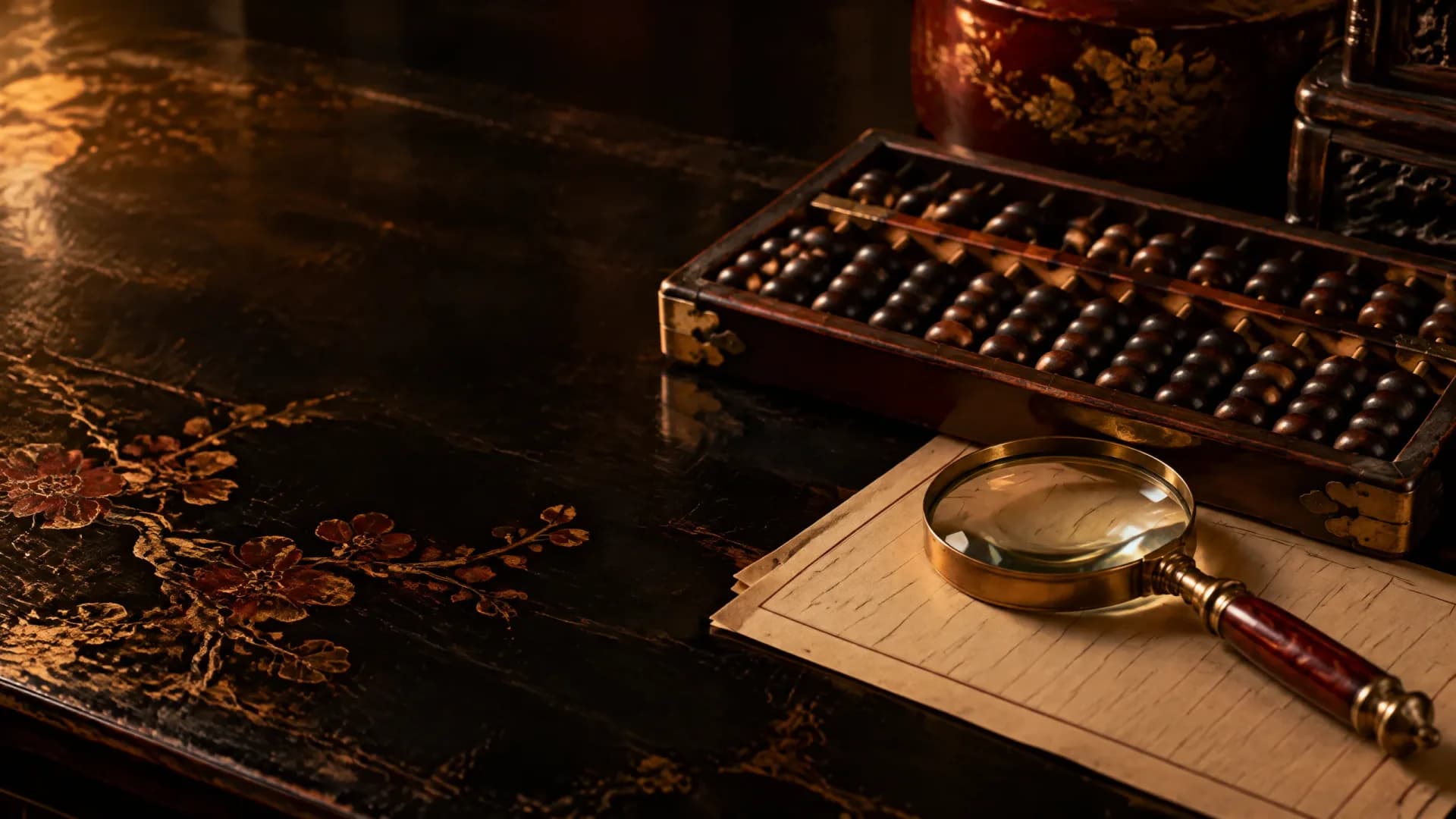
To evaluate objectively whether an AI Zi Wei Dou Shu service deserves your trust, it helps to examine these two processing layers side by side. The mathematical star-placement engine works like a traditional wooden abacus governed by invariant arithmetic rules. Given the exact same five inputs (birth year, month, day, birth hour, and gender), the star coordinates across the Heaven Plate and Earth Plate (Thiên Bàn và Địa Bàn) must always produce one identical result every single time.
Meanwhile, the language synthesis layer acts like a brass-rimmed magnifying glass that connects and contextualizes dozens of stars converging across the Three Harmonies and Four Cardinal Positions (tam phương tứ chính). Older generation software simply stitched together isolated pre-written paragraphs for each star, often leaving readers confused when one paragraph contradicted the next. When the language layer is governed by strict scholarly rules, it interprets only the actual stars present in the palace, their exact Temple (Miếu), Prosperous (Vượng), Gained (Đắc), or Fallen (Hãm) brightness, and the active Four Transformations (Tứ Hóa). As a result, the system synthesizes a balanced portrait while citing concrete star evidence for every observation.
| Comparison Criterion | Classic Template-Stitching Software | Prompting a General Chatbot Directly | Controlled Math Engine + Rule-Governed AI |
|---|---|---|---|
| Calendar conversion and star placement | Fixed by programmed mathematical formulas | Frequently miscalculates lunar dates and star cells | Fixed by deterministic calendrical and mathematical formulas |
| Synthesis across Three Harmonies | Weak (concatenates disconnected snippets) | Reads smoothly but relies on fabricated star placements | Synthesizes coherently from the actual verified star combinations |
| Data consistency across repeated runs | Consistent chart data, but repetitive prose | Changes randomly from one prompt to the next | Immutable star grid paired with evidence-backed explanations |
| Editorial tone and ethical standards | Depends on legacy snippet libraries | Prone to dramatic or fatalistic exaggerations | Bounded by objective, non-fatalistic editorial guidelines |

Sound engineering in Zi Wei Dou Shu technology requires every bead on the calendrical abacus to sit in its exact mathematical place before any language synthesis begins.
3. What are the real-world strengths and natural limits of AI Zi Wei Dou Shu?
The greatest practical strength of a well-architected AI Zi Wei Dou Shu system is its capacity to cross-reference all twelve palaces, the opposing palace, the Three Harmonies (Tam hợp) triad, flanking palaces, the annual transit (lưu niên), and the 10-year decade cycle (đại vận) simultaneously without overlooking subtle auxiliary stars. At the same time, a responsible platform maintains a calm, neutral editorial voice that respects personal agency and avoids fear-mongering language.
Even so, every reader should keep in mind the natural boundaries of any automated chart analysis tool. Technology cannot automatically know your family's cultural nuances, your local industry environment, or the personal discipline and ethical habits you have cultivated over years of effort. Above all, astrological readings are provided strictly for personal reflection and cultural reference; the content does not make guaranteed predictions, does not provide medical or psychological diagnoses, and never replaces qualified professional advice in financial, legal, or healthcare matters.
> Note: When choosing a trustworthy Zi Wei Dou Shu service online, never submit sensitive personal details to websites that lack transparent data privacy policies, and steer clear of services that use fatalistic scare tactics to pressure users.
4. What birth-data privacy safeguards matter when checking a Zi Wei chart online?
Your birth date, birth hour, and gender are personal profile details closely tied to your identity. Consequently, whenever you explore AI Zi Wei Dou Shu tools online, information security and birth-data privacy should be treated as top-priority evaluation criteria.
On responsible platforms such as La So Viet, the AI interpretation engine runs on infrastructure operated directly by La So Viet, meaning your chart never leaves La So Viet's self-managed environment for external processing. Third-party analytics tools never receive a user's full name, exact birth date and hour, free-text questions, or chart identifier. In addition, birth profiles and charts created under an unlinked anonymous guest session automatically expire and are permanently purged within 24 hours, with a manual delete option available at any time. Registered account holders can export their account data in JSON format and request account deletion with a 30-day recovery window.
5. How should readers combine AI Zi Wei Dou Shu analysis with real-life planning?
The smartest way to use AI Zi Wei Dou Shu is to treat it as a structured research assistant that organizes classical chart data so you can reflect on your own decisions. Your first practical step should always be verifying chart accuracy to rule out a wrong birth hour on a Zi Wei chart by comparing the core temperament described at the Life Palace and key past milestones against your lived experience.
Once you confirm that the chart matches your baseline traits, extract actionable insights for skill development and risk management. If the reading highlights that your Career Palace (cung Quan Lộc) favors deep technical specialization or research, invest steadily in long-term credentials and focused craft. Conversely, if an upcoming annual transit shows heightened friction around your Wealth Palace (cung Tài Bạch), take the initiative to strengthen your cash reserves, audit budgets, and review written contract terms carefully.
Key points
- Reliable AI Zi Wei Dou Shu must strictly separate deterministic mathematical star placement from language synthesis.
- Avoid asking general-purpose chatbots to calculate lunar dates or place stars from scratch, as they easily hallucinate star positions.
- A credible chart reading always cites the exact major stars, auxiliary stars, and brightness states present on your 12-palace grid.
- Chart interpretations serve for self-reflection and reference only, never replacing professional financial, legal, or medical advice.
Would you like to experience how a deterministic lunisolar calculation engine pairs with clear, star-cited palace synthesis? You can generate your personal Zi Wei chart for free to inspect your twelve-palace grid today.
Frequently asked questions
Why do general-purpose AI chat tools often name the wrong stars in my Life Palace when I enter my birth date?
Because general chat tools predict words statistically rather than running a verified perpetual lunisolar calendar and deterministic Zi Wei Dou Shu star-placement algorithm, causing them to guess or scramble star locations across the twelve palaces.
How can I verify whether an AI Zi Wei Dou Shu reading is grounded in authentic chart rules?
Open your twelve-palace chart grid alongside the reading and cross-check directly whether every major star, Temple, Prosperous, Gained, or Fallen brightness label, and Three Harmonies and Four Cardinal Positions combination cited in the text actually appears in those exact palaces.
Will an AI Zi Wei Dou Shu system change my star chart if I generate it multiple times?
On any platform that properly isolates a deterministic mathematical star-placement engine, entering the same birth year, month, day, birth hour, and gender will always produce the exact same twelve-palace star chart every time.
Should I rely solely on a Zi Wei Dou Shu reading to make investment or medical decisions?
No. A Zi Wei Dou Shu reading offers a cultural and reflective perspective on temperament tendencies and timing cycles; it does not predict guaranteed outcomes, does not diagnose conditions, and never replaces licensed financial, legal, or medical advice.
Sources
- La Hong Tien (La Hồng Tiên), Complete Compendium of Zi Wei Dou Shu (Tử Vi Đẩu Số Toàn Thư): Classical rules for placing the fourteen major stars, auxiliary stars, and interpreting the Three Harmonies and Four Cardinal Positions.
- Vân Đằng Thái Thứ Lang, Revised Zi Wei Dou Shu (Tử Vi Đẩu Số Tân Biên): Methodology for constructing a Zi Wei chart under the Vietnamese Yin-Yang (âm dương) lunisolar calendar.
- La So Viet Public Methodology Specification: Architectural principles separating deterministic calendrical calculation from evidence-cited language synthesis.