What are the major schools of Purple Star Astrology?
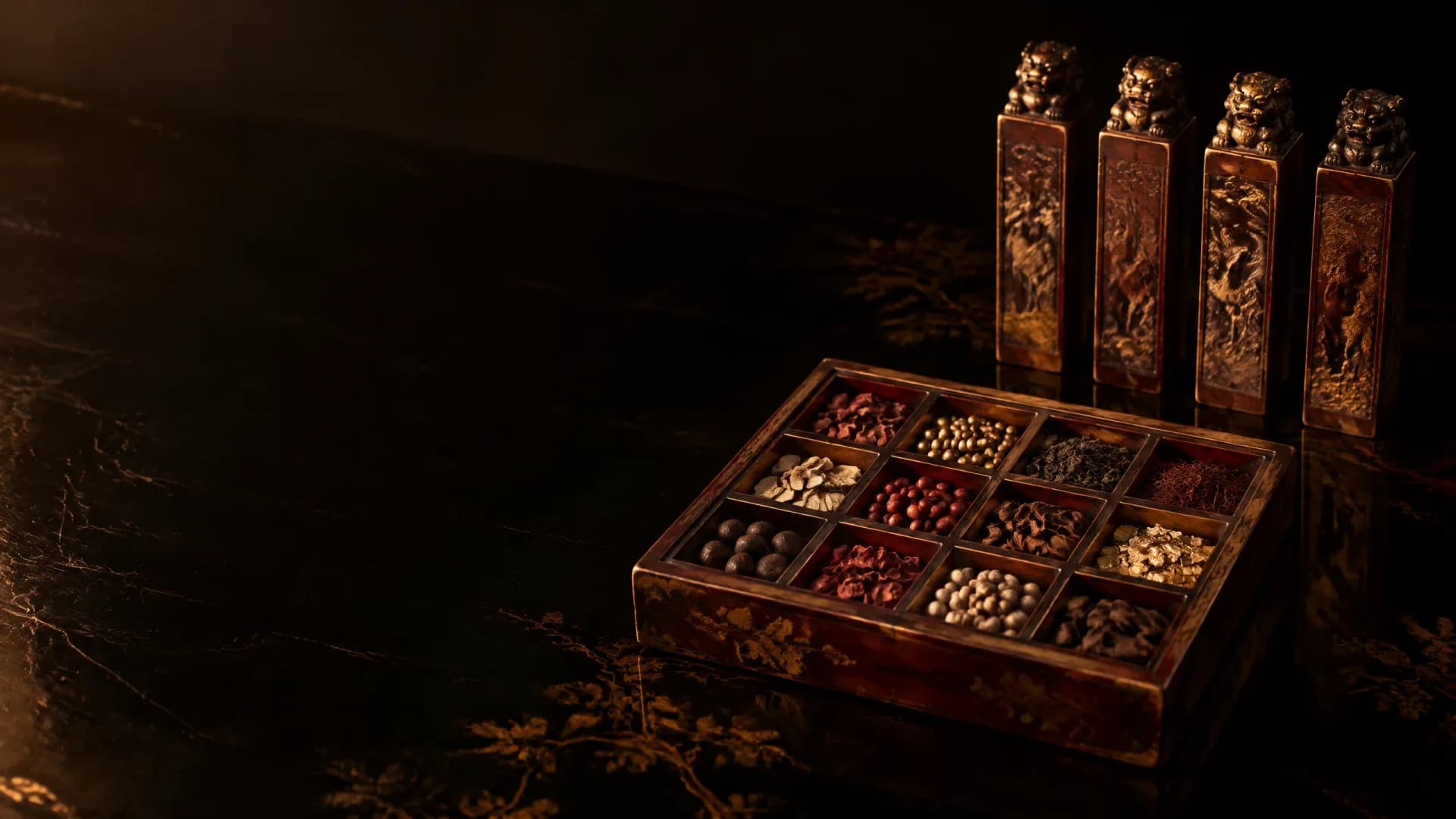
Across China, Vietnam, Taiwan, and Hong Kong, Purple Star Astrology (Tử Vi Đẩu Số) evolved from Ming and Qing compendia into several documented lineages anchored around Zi Wei (Tử Vi). Methodologically, scholars distinguish two main streams: the Three Harmonies school — reading major stars, auxiliary stars, brightness, and structural patterns across the Three Harmonies and Four Cardinal Positions — and the Flying Star Four Transformations school — tracking how Hua Lu, Hua Quan, Hua Ke, and Hua Ji project dynamically from each palace's Heavenly Stem.
In Vietnamese scholarship, readers regularly encounter the terms Southern lineage (represented by syntheses such as Vân Đằng Thái Thứ Lang's 1956 work, Nguyễn Phát Lộc's functional studies, and specialized Thai Tue ring scholarship) and Northern lineage, alongside the Zhongzhou (Central Plains) sixty-star-system tradition popularized in Hong Kong and Taiwan.
| School / Lineage | Primary analytical lens | Distinctive technical markers | Representative literature |
|---|---|---|---|
| Three Harmonies (Vietnamese Southern mainstream) | 14 major stars, >90 auxiliary stars, brightness tiers, and four-palace patterns | Uses full Chang Sheng, Thai Tue, and dual Void markers (Tuan & Triet) | Tử Vi Đẩu Số Toàn Thư; Tử Vi Đẩu Số Tân Biên (1956) |
| Thai Tue ring focus (Vietnamese 20th-c. branch) | Weighs alignment between the Thai Tue trine and the Life–Career–Wealth trine | Emphasizes civic conduct, timing alignment, and Four Spirit stars | 20th-century Southern Vietnamese monographs |
| Flying Star / Four Transformations (Northern) | Directional flights of Hua Lu, Hua Quan, Hua Ke, Hua Ji across 12 palace stems | Streamlines minor stars; analyzes self-transformations and palace-to-palace vectors | Qin Tian Four Transformations & Taiwanese Flying Star texts |
| Zhongzhou (Central Plains) school | Sixty star-pair systems read across opposing palaces and decade shifts | Focuses on opposing-palace polarity and decade event pinpointing | Wang Tingzhi sixty-star-system lectures |
How does the Three Harmonies school read a chart?
The Three Harmonies approach forms the foundational framework taught in most Vietnamese manuals. Every major and auxiliary star carries distinct qualities modulated by its brightness rating (Temple, Prosperous, Gained, Neutral, Fallen), by dual Void markers (Tuan Trung Khong Vong and Triet Lo Khong Vong), and by classic structural alignments such as the Emperor-Treasury-General Alignment, Strategist-Moon-Harmony-Mentor Pattern, or Vanguard-Breaker-Desire Triad.
Within Vietnamese Three Harmonies study, the Thai Tue ring branch adds special attention to where the twelve annual-branch deities (Thai Tue, Quan Phu, Bach Ho, Tang Mon, Tue Pha, Dien Khach) sit relative to the Life Palace, reading how personal ambition aligns with social norms and collective timing. Its enduring strength lies in nuanced portraits of character, work habits, and domain balance. Introductory guides on La So Viet — including 14 major stars and how to read a Zi Wei chart for beginners — build on this documented foundation.
How does the Flying Star Four Transformations school differ?
Where Three Harmonies charts display roughly a hundred stars on the grid, Flying Star lineages pare back smaller seasonal stars to concentrate on roughly eighteen core stars plus the twelve Heavenly Stems assigned to each palace cell via the Five Tigers rule. Treating each palace as an active subject, the reader projects Hua Lu (flow and opportunity), Hua Quan (responsibility and agency), Hua Ke (method and reputation), and Hua Ji (concentration and friction) from that palace's stem into receiving cells.
For example, tracing where transformations from the Career Palace stem land in the Wealth, Spouse, or Fortune Palaces highlights how daily professional commitments nourish or strain household resources and rest. Self-transformations inside a single cell also mark areas where habits change rapidly.
Why do minor rule differences appear between Southern and Northern texts?
Beyond interpretive emphasis, classical manuscripts preserve documented rulebook variants across three technical points: first, the Four Transformations stem verse for Geng years (Tai Yang, Wu Qu, Tai Yin, Tian Tong versus Tai Yang, Wu Qu, Tian Tong, Tai Yin) and Ren years (Tian Liang, Zi Wei, Zuo Fu, Wu Qu versus Tian Liang, Zi Wei, Tian Fu, Wu Qu); second, how lunisolar leap months are split at mid-month (day 15) or assigned to the base month; and third, whether UTC+7 Vietnamese lunisolar tables or UTC+8 Beijing tables govern new-moon boundaries.
How much do lineage differences change your chart?
The structural skeleton of the chart — all twelve palace coordinates, the Body Palace, the Five-Element Bureau, and the positions of all fourteen major stars under identical lunisolar inputs — remains consistent across major schools. Differences cluster in selected auxiliary stars, Geng/Ren transformations, leap-month births, and annual minor cycle formulas rather than overturning the core star rings. Verify inputs first with how a Zi Wei chart is calculated and review interpretive limits in is Zi Wei Dou Shu accurate.
Which lineage should a beginner learn first?
Start with one consistent, openly documented Three Harmonies rulebook so you understand the twelve palaces, fourteen major stars, core literary and helper pairs, Void modifiers, and birth-year Four Transformations thoroughly before layering on Flying Star palace vectors or Zhongzhou sixty-star pairings. Mixing formulas from two separate books on the same chart creates artificial contradictions. Inspect our declared conventions on knowledge sources and Zi Wei methodology, then build your chart to practice.