Many readers who are new to Zi Wei Dou Shu wonder what "mạng cực thân" means when they hear older generations use the phrase. It is simply a familiar folk shorthand for three core concepts: Mệnh (the Life palace), Cục (the Element Bureau) and Thân (the Body palace). Together these three form the basic frame for reading a Zi Wei chart. They give you an overall picture of a person's nature and life circumstances. Understanding the three concepts of Mệnh, Thân and Cục correctly makes reading a chart clearer and more practical.
What is "mạng cực thân"? The folk name for Mệnh, Cục and Thân
In spoken tradition, foundational terms were often shortened so they rolled off the tongue more easily. "Mạng cực thân" is a typical example.
Why people shorten it to "mạng cực thân"
Whenever they opened a chart, people of earlier generations looked at these three points first. Mệnh, Cục and Thân were mentioned together at the start of every reading, and habit gradually shortened them into one phrase. Over time the folk form "mạng cực thân" became the familiar way to say it. It is an everyday convention, not a mysterious term or something separate from scholarly Zi Wei.
In folk speech, "mạng" means the Life palace
The word "mạng" in this phrase refers to Mệnh, the Life palace on the chart. The Life palace reflects the core person: temperament, how you react under pressure and what you want when no one is watching. It is the first anchor a reader uses before widening the view to other areas of life. Once you understand this, the spoken shorthand stops being confusing.
What is the Life palace and what does it tell you?
The Life palace sits at the center of any approach to Zi Wei Dou Shu. It reflects the roots of each person from birth.
Where the Life palace sits on the chart
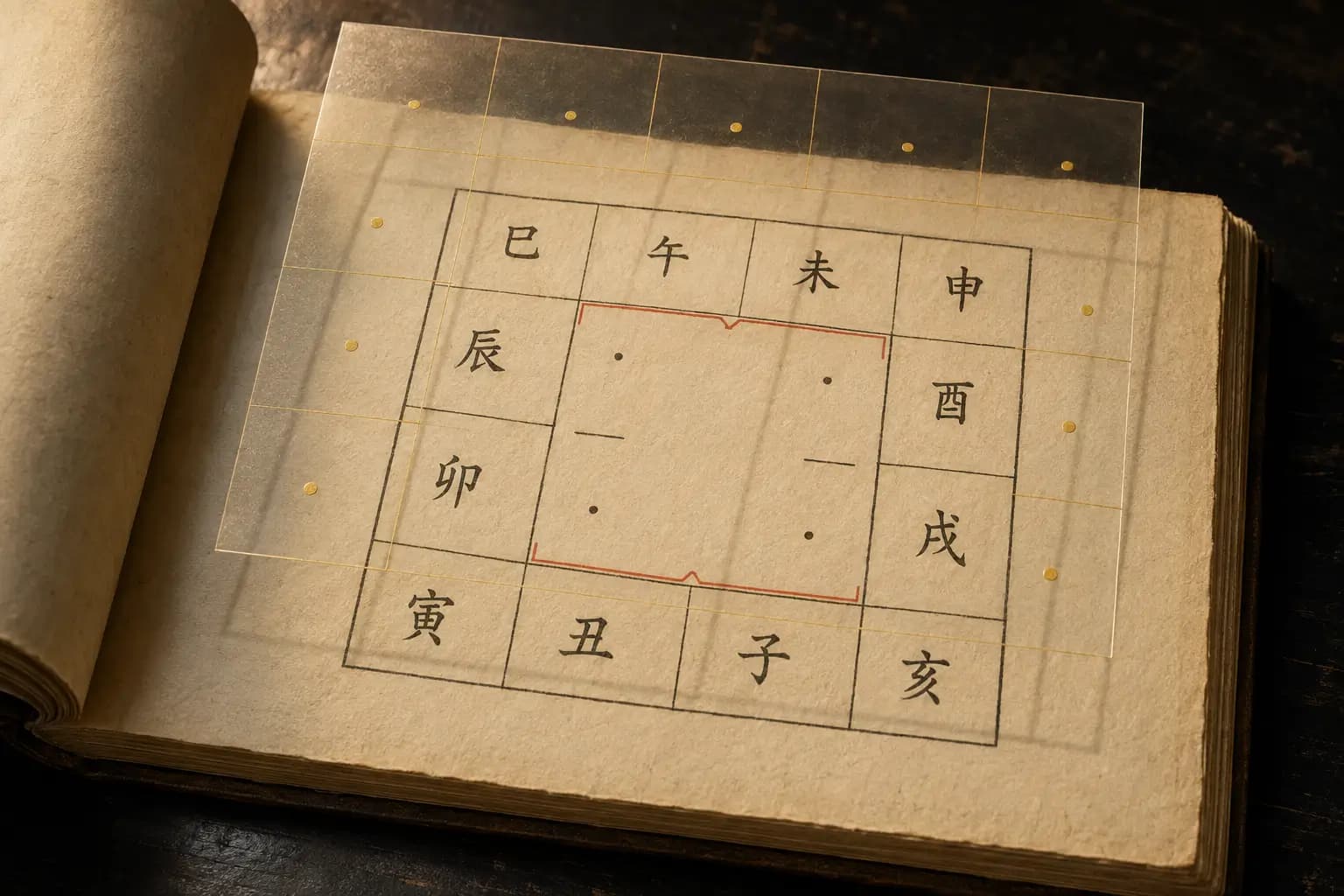
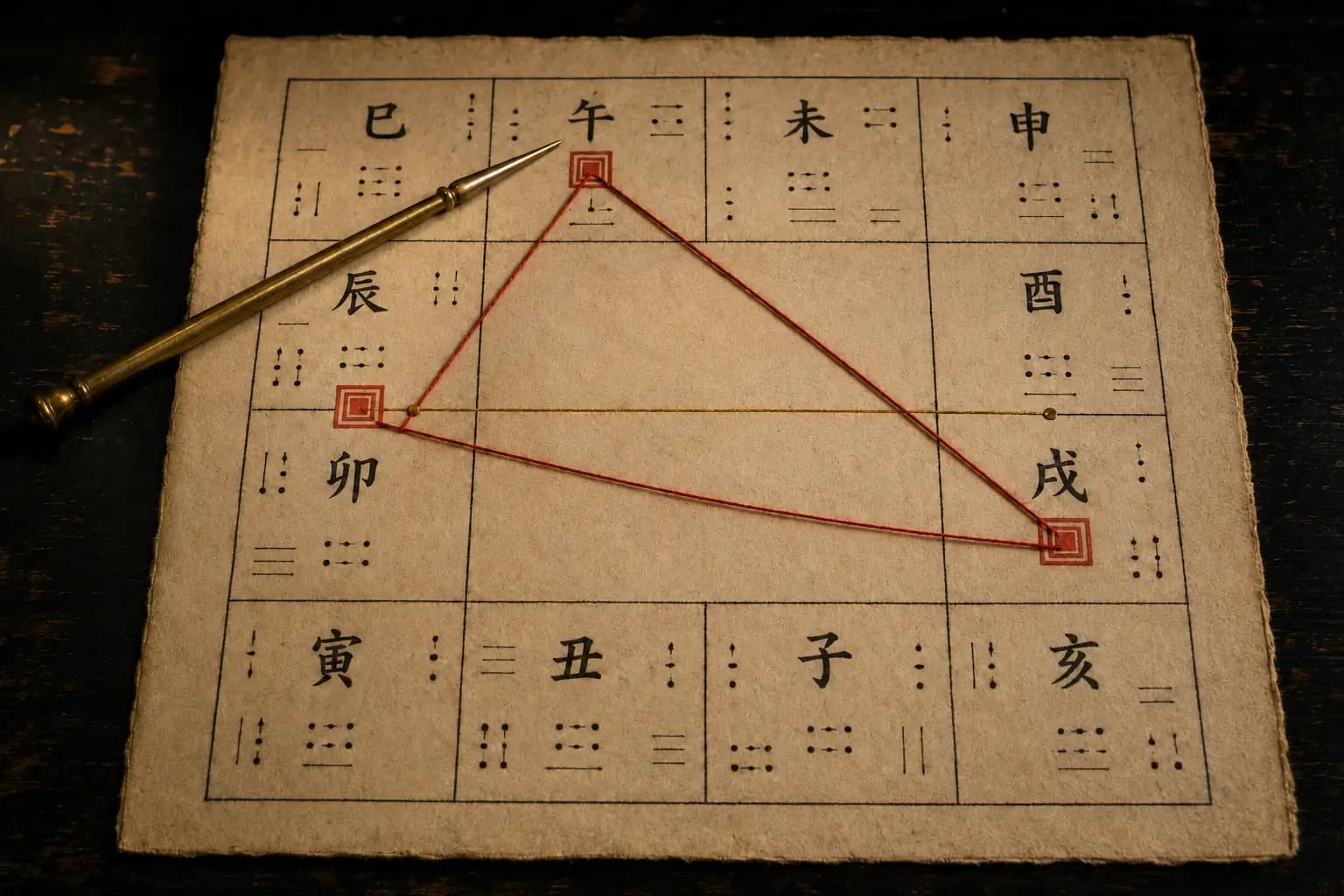
The Life palace is placed from the lunar month and hour of birth. From that position, the functional palaces among the twelve palaces of the chart are assigned one after another. In Zi Wei, no palace stands alone. The meaning of the Life palace always shifts with the stars inside it and with the opposite and trine palaces that face it. Read the Life palace together with its three-direction, four-square network rather than looking at a single cell.
The Life palace describes the core person, not a life sentence
Each trait shown in the Life palace usually has two sides in real life. A person with a strong ego, for example, makes decisions boldly but finds it hard to give way to others. A cautious person makes few mistakes but may hesitate when an opportunity appears. The Life palace only points to natural tendencies; it does not fix a destiny that can never change. Whether things turn out well or badly still depends on how each person works on themselves every day.
What is Cục? Why Water 2, Wood 3, Metal 4 and the other Bureaus?
If Mệnh is the person, Cục stands for the surroundings and the environment around them.
Cục is the element of the environment, not of the person
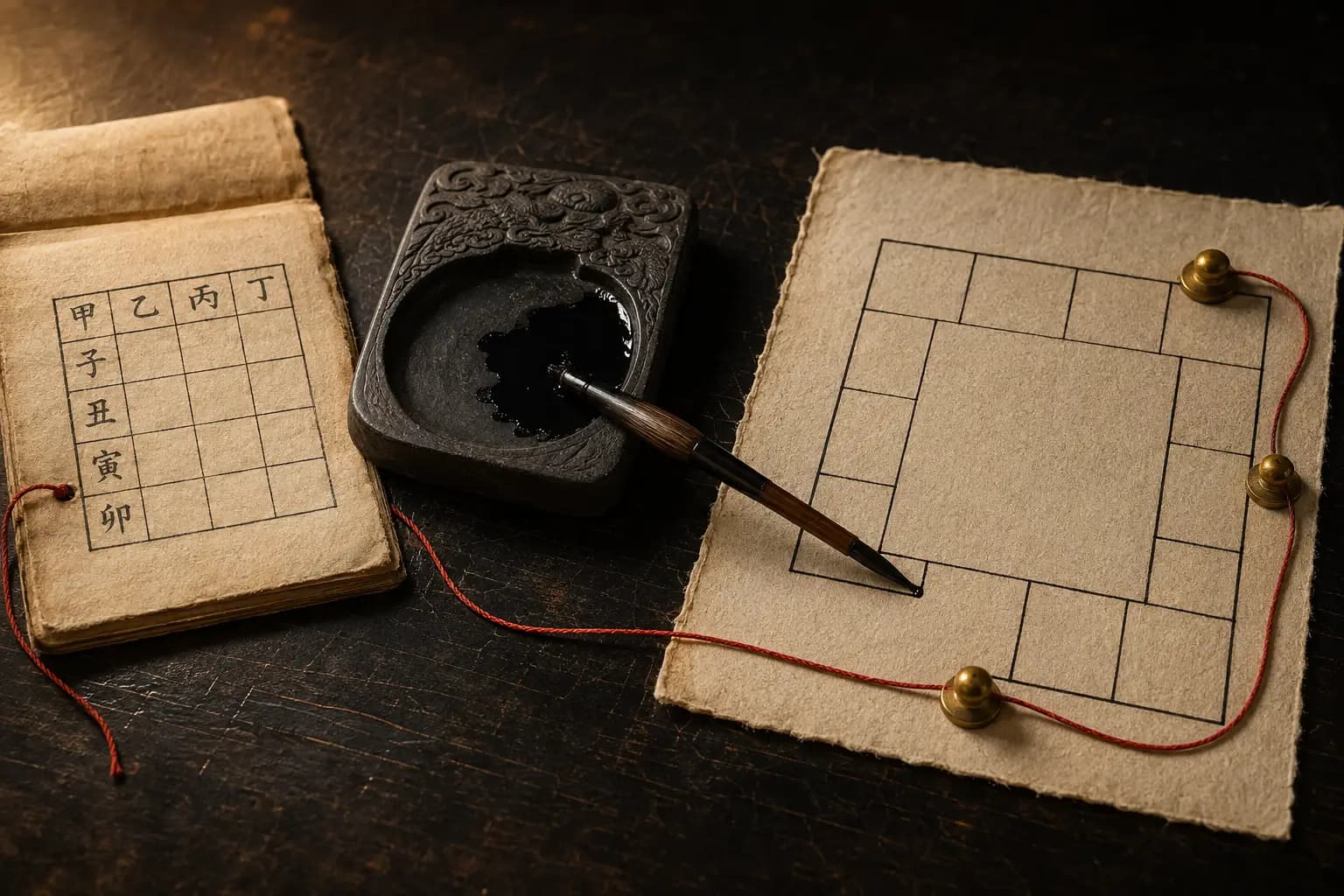
Many people mistake Cục for their own birth element. In fact, Cục reflects the Five Elements quality of the environment a person interacts with. It is determined from the Heavenly Stem of the birth year and the Earthly Branch of the Life palace. It shows whether the social space around you tends to support you or asks you to adapt more. Cục also serves as the base rhythm for placing the stars.
A quick way to remember the five Bureaus
Zi Wei sets five Bureaus that match the five elements, each with a fixed technical number. They are Water 2 (Thủy Nhị Cục), Wood 3 (Mộc Tam Cục) and Metal 4 (Kim Tứ Cục), followed by Earth 5 (Thổ Ngũ Cục) and Fire 6 (Hỏa Lục Cục). These numbers are technical conventions of the star-placement system. They are not a scale for measuring luck. To see how the ten-year cycles run on the Bureau, read more about major and minor periods.
How Mệnh and Cục relate: generating, controlling, harmony and restraint
The Five Elements interaction between Mệnh and Cục describes how smoothly you and your environment fit together.
How "Mệnh generates Cục" differs from "Cục generates Mệnh"
When Cục generates Mệnh, the outside world creates many favorable conditions that lift you up. Such a person usually fits in easily and receives support from their surroundings. When Mệnh generates Cục, the person tends to give actively and to reshape their circumstances. Each direction has its own character, and you should not rush to call one better. Depending on the viewpoint and on the different Zi Wei schools, giving and receiving carry different meanings.
Does "Mệnh controls Cục" really mean a hard life?
A controlling relationship shows that you need to adjust more when facing reality. When Mệnh controls Cục, you usually have to build your position through your own effort. When Cục controls Mệnh, you need to learn flexibility and patience to adapt to your circumstances. Control does not mean a hard, stuck or failed life. It is simply a question of adaptation, a reminder to build inner strength before life's challenges.
Harmony and restraint in the Mệnh–Cục relationship
Besides generating and controlling, the Mệnh–Cục relationship can also be in harmony or under restraint. Harmony appears when Mệnh and Cục share the same element, for example both Wood. This state usually feels stable and causes little upheaval between the person and their circumstances. Restraint is a controlling relationship in which a mediating element softens the clash. In everyday terms, two sides hold opposite views, yet a go-between reconciles them and things stay calm. Even so, the Mệnh–Cục relationship is only a base layer of reference and cannot replace a reading of the whole chart.
What is the Body palace and how does it differ from the Life palace?
If Mệnh is your original nature, Thân is how you grow and act in practice as an adult.
Where the Body palace sits and why it is called the later life
The Body palace never stands alone; it always shares one of six functional palaces on the chart. It is placed from the combination of the birth month and birth hour. Folk tradition calls Thân the later life because its way of acting shows more clearly with age. Many people take the years after thirty as the point where the Body palace becomes easier to observe. That is only a reference convention, not a fixed milestone for everyone. Mệnh and Thân run side by side throughout life.
What Body in Life, Body in Fortune, Body in Career and the others mean
The palace where Thân sits suggests the area of life where you tend to invest the most effort as an adult. Body in the Life palace, for example, is usually read as a person whose inner thoughts and outward actions are quite consistent. Body in the Fortune and Virtue palace turns attention toward spiritual life and family roots. Body in the Career palace shows a tendency to focus on work and the workplace. Body in the Wealth palace leans toward care in managing and building finances. Body in the Spouse palace is tied to responsibility toward a partner, while Body in the Travel palace reflects active social engagement. Every reading of the Body palace still needs the stars seated there to be accurate.
Reading Mệnh, Cục and Thân together: the order and what to avoid
Combining these three elements calls for a methodical, step-by-step and calm way of looking.
A suggested order for beginners
Beginners should practice how to read a Zi Wei chart in clear steps. First, check that the birth hour and the other chart data are correct. Next, look at the Life palace and the palaces that face it to understand your inner nature. Then compare the elements of Mệnh and Cục to see how well you fit your environment. After that, turn to the Body palace to see how you act as an adult. Only then bring in the timing cycles to follow each stage of change.
Three common mistakes when reading your own chart
The first mistake is taking a single star out of context to predict a whole life. The second is treating a controlling relationship between Mệnh and Cục as disaster or failure. The third is looking only at the Life palace and forgetting the practical role of the Body palace. Remember that Zi Wei is a tool for reflection, not for passing judgment on a fixed destiny.
Conclusion: understand it correctly to avoid confusion
In short, Mệnh is the root of the person, Cục is the base rhythm of the environment and Thân is how you operate in practice. The three support each other and form a many-sided picture of one person. Understanding their true nature helps you approach Zi Wei with an objective, calm view. Keep learning the foundations carefully instead of trusting one-sided predictions.
Frequently asked questions
What is "mạng cực thân"?
"Mạng cực thân" is the folk shorthand for three concepts in Zi Wei Dou Shu: Mệnh, Cục and Thân. They are the three foundations usually read together at the start of a chart reading.
What does it mean when Mệnh and Cục generate each other, and is it good?
A generating relationship means the elements of the Life palace and the Bureau feed each other, either Cục generating Mệnh or Mệnh generating Cục. It is usually considered smoother than a controlling one. Still, it is only one layer of reference and should be read with the other palaces.
Is "Mệnh generates Cục" or "Cục generates Mệnh" better?
Each direction is read in its own way, and the schools of Zi Wei differ on it. There is no general rule that one is better for everyone. Treat it as a description of how a person and their surroundings interact.
If Mệnh controls Cục, will life be hard?
A controlling relationship is usually read as needing more effort to adjust to your circumstances. It does not mean a hard or failed life. Read it together with the whole chart and your real situation.
What does the Body palace mean in a Zi Wei chart?
The Body palace is usually read as leaning toward the second half of life. It reflects how a person acts concretely, takes responsibility and adjusts their life as an adult.
How do the Life palace and the Body palace differ?
The Life palace is the original foundation, leaning toward temperament and natural reactions. The Body palace is how a person operates, acts and changes later through real experience.
At what age does the Body palace start to matter more than the Life palace?
A common view is from around thirty, when personal choices play a larger role. This is a reference convention, not a fixed milestone for everyone.
Why are the Bureaus called Water 2, Wood 3 and Metal 4?
Each Bureau pairs an element with a number by the convention of the star-placement system. The Bureaus are Water 2, Wood 3, Metal 4, Earth 5 and Fire 6. The number is a technical convention, not a luck score.
What is Body in the Life palace and how does it shape personality?
Body in the Life palace means the Body palace falls in the same position as the Life palace. People with this arrangement are usually read as quite consistent between inner thoughts and outward actions. You still need to read the stars in that palace.
You can also compare the article What are Temple, Prosperous, Gained and Fallen? in the same section.
You can also compare the article What is the three-direction, four-square layout? in the same section.