Twin Luminaries in Brilliance (Nhật Nguyệt Tịnh Minh) is a major constructive configuration in Purple Star Astrology (Tử Vi Đẩu Số) formed when both Tai Yang (Thái Dương), the Sun, and Tai Yin (Thái Âm), the Moon, occupy Temple (Miếu) or Prosperous (Vượng) brightness positions and converge upon the Life Palace (cung Mệnh). This structure represents clear intellect, balanced judgment, and the harmonious alignment of public reputation and material stability.
1. What is the Twin Luminaries in Brilliance pattern and why is it highly regarded?
Across the classical structural patterns in Zi Wei Dou Shu, the two luminaries Tai Yang and Tai Yin are likened to the two eyes of a Zi Wei chart (lá số Tử Vi) and the twin sources of light that nourish the twelve palaces. In Sino-Vietnamese terminology, the character for Sun (Nhật) refers to Tai Yang, the character for Moon (Nguyệt) refers to Tai Yin, and the phrase for joint brilliance (tịnh minh) means both luminaries radiate at full strength while supporting one another.
In terms of elemental and functional nature within the Five Elements (ngũ hành), Tai Yang belongs to Fire and acts as a star of civic nobility, governing public standing, administrative responsibility, forthright integrity, and the chart's connection to the father or husband. Conversely, Tai Yin belongs to Water and acts as a star of affluence, governing financial accumulation, real estate, quiet refinement, and the connection to the mother or wife.
When a chart achieves the Twin Luminaries in Brilliance configuration, the individual benefits from a well-proportioned Yin-Yang (âm dương) balance between civic reputation and material wealth, standing alongside major frameworks such as the Emperor-Treasury-General Alignment (Tử Phủ Vũ Tướng) and the Strategist-Moon-Harmony-Mentor Pattern (Cơ Nguyệt Đồng Lương). Classical verses in the Complete Compendium of Purple Star Astrology praise this structure by noting that when the Sun and Moon shine together in convergence, a person combines capability with integrity and is well suited for high institutional responsibility.
The diurnal cycle of the Sun and Moon across the 12 palaces
Tai Yang only reaches true luminosity at Gained (Đắc), Prosperous, or Temple brightness when placed in the daytime palaces running from Yin (Dần) at dawn through Mao (Mão), Chen (Thìn), Si (Tỵ), and Wu (Ngọ) to Wei (Mùi). By contrast, Tai Yin radiates brightly only when stationed in the nighttime palaces running from Shen (Thân), You (Dậu), Xu (Tuất), and Hai (Hợi) through Zi (Tý).
Consequently, a chart can form this pattern only when Tai Yang sits in the daytime half of the wheel while Tai Yin sits in the nighttime half. At the same time, both stars must converge within the Three Harmonies and Four Cardinal Positions (tam phương tứ chính) or flank the Life Palace directly to establish an authentic Twin Luminaries in Brilliance layout.
2. Which Life Palace positions form the classic Twin Luminaries in Brilliance layouts?
Classical texts record four primary positional arrangements that embody the Twin Luminaries in Brilliance structure. The most canonical layout places the Life Palace at Chou (Sửu), where Tai Yang at Si in Prosperous brightness inside the Career Palace (cung Quan Lộc) and Tai Yin at You in Prosperous brightness inside the Wealth Palace (cung Tài Bạch) converge from the Three Harmonies (Tam hợp) triangle.
A second celebrated arrangement places the Life Palace at Wei as a Palace Without Major Stars (Vô Chính Diệu) or with a quiet major star (chính tinh), receiving the convergence of a Temple-bright Tai Yang at Mao and a Temple-bright Tai Yin at Hai. Classical literature calls this sub-pattern Bright Pearl Rising from the Sea (Minh Châu Xuất Hải). Two additional variations include the direct opposition of Tai Yang at Chen and Tai Yin at Xu, and the flanking structure where Tai Yang at Yin and Tai Yin at Zi bracket the Life Palace at Chou.
| Classical Arrangement | Life Palace Position | Tai Yang Position | Tai Yin Position | Associated Traditional Name |
|---|---|---|---|---|
| Si, You, and Chou Three Harmonies | Life Palace at Chou | Si Palace (Career Palace, Prosperous) | You Palace (Wealth Palace, Prosperous) | Canonical Twin Luminaries in Brilliance |
| Hai, Mao, and Wei Three Harmonies | Life Palace at Wei | Mao Palace (Career Palace, Temple) | Hai Palace (Wealth Palace, Temple) | Bright Pearl Rising from the Sea |
| Chen and Xu Opposition Axis | Life Palace at Chen or Xu | Chen Palace (Prosperous brightness) | Xu Palace (Prosperous brightness) | Sun at Chen and Moon at Xu in Brilliance |
| Flanking Palaces at Chou | Life Palace at Chou | Yin Palace (Parents Palace, Prosperous) | Zi Palace (Siblings Palace, Temple) | Sun and Moon Flanking the Life Palace |
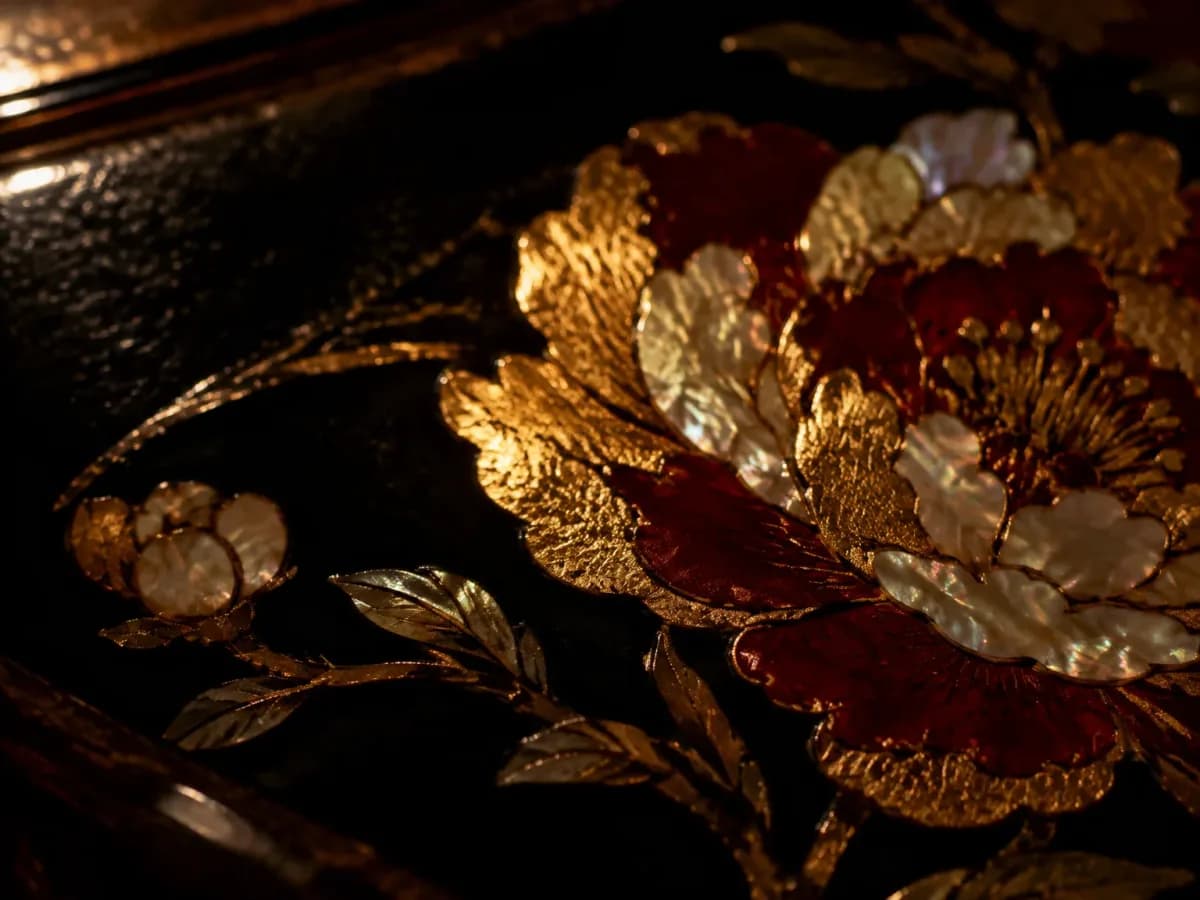
The interplay between the warm gold of Tai Yang and the cool mother-of-pearl luster of Tai Yin illustrates a durable balance of Yin and Yang.
Analyzing Bright Pearl Rising from the Sea and the Chen-Xu opposition
In the Bright Pearl Rising from the Sea configuration at Wei, the Mao position corresponds to 05:00 to 07:00 in the morning when the rising sun clears the horizon, while the Hai position corresponds to 21:00 to 23:00 at night when the autumn moon shines across clear water. A Life Palace at Wei receives both the fresh morning sunlight and the tranquil night moonlight, supporting steady academic achievement, clear reputation, and long-term asset growth.
In the Chen-Xu opposition layout, the two luminaries face each other directly across the Heaven's Net and Earth's Snare axis. Backed by the strong morning vitality of Tai Yang at Chen (07:00 to 09:00) and the clear evening radiance of Tai Yin at Xu (19:00 to 21:00), the chart holder possesses the perseverance to overcome early structural hurdles and establish lasting authority.
3. How does Twin Luminaries in Brilliance differ from Inverted Luminaries and co-located luminaries?
When consulting the star brightness scale of Temple, Prosperous, Gained, Neutral, and Fallen, it is important to distinguish Twin Luminaries in Brilliance from Inverted Luminaries (Nhật Nguyệt Phản Bối), where both stars are Fallen (Hãm). Inverted Luminaries occurs when Tai Yang lands in nighttime palaces (Shen, You, Xu, Hai, or Zi) while Tai Yin lands in daytime palaces (Mao, Chen, Si, or Wu). Individuals with the inverted layout typically rely on self-made effort, navigate steeper early workloads, and often build their careers away from their birthplace.
Meanwhile, Co-located Luminaries at Chou or Wei carries a mixed, adaptable quality because one bright luminary shares a cell with one dimmed luminary. For the Twin Luminaries in Brilliance pattern itself, because both stars already shine at peak luminosity, they are sensitive to having Cycle Void (Tuần) or Path-Severing Void (Triệt) stationed directly inside the Tai Yang or Tai Yin palaces, which can veil their natural radiance.
> Note: Beyond checking palace positions on the grid, always cross-reference the native's actual birth hour. Someone born during daytime hours resonates more strongly with the civic and leadership vitality of Tai Yang, whereas someone born at night connects more deeply with the financial and contemplative strength of Tai Yin.
4. Which auxiliary stars elevate Twin Luminaries in Brilliance to its highest potential?
Classical verses summarize the ideal companions for an auspiciously structured Zi Wei chart of this type as the Three Wonders and the literary noble stars. Foremost among these auxiliary stars (phụ tinh) are Hua Lu (Hóa Lộc), Hua Quan (Hóa Quyền), and Hua Ke (Hóa Khoa) from the Four Transformations (Tứ Hóa) system. When bright Tai Yang and Tai Yin converge with Hua Lu, Hua Quan, and Hua Ke, the native's financial resources, executive authority, and scholarly reputation reinforce one another.
The second supportive group includes literary and noble stars such as Wen Chang (Văn Xương), Wen Qu (Văn Khúc), Dao Hua (Đào Hoa), Hong Luan (Hồng Loan), Tian Kui (Thiên Khôi), and Tian Yue (Thiên Việt). Conversely, when the two luminaries are already bright, they prefer to avoid heavy malefic clashes and Hua Ji (Hóa Kỵ), as Hua Ji can introduce paperwork friction, verbal misunderstandings, or visual and mental fatigue.
5. How should someone with Twin Luminaries in Brilliance direct their personal development?
To turn the structural potential of this configuration into tangible accomplishment, individuals thrive in environments that value transparency, structured knowledge, and public trust. Fields that align naturally with this pattern include organizational management, diplomacy, higher education, publishing and media, banking and finance, and corporate governance.
On a personal level, because Tai Yang inclines a person toward taking on public responsibility and visible leadership, chart holders should guard against overcommitting their schedule and exhausting their physical reserves. Maintaining regular rest routines and balancing external professional duties with quiet family time are practical keys to sustaining long-term well-being.
Key points
- Twin Luminaries in Brilliance occurs when both Tai Yang and Tai Yin sit at Temple or Prosperous brightness and converge on the Life Palace.
- The pattern blends the civic reputation of Tai Yang with the financial and property stability of Tai Yin.
- Classic placements include the Life Palace at Chou or Wei receiving Tai Yang at Si or Mao and Tai Yin at You or Hai.
- The structure performs best when joined by Hua Lu, Hua Quan, Hua Ke, Wen Chang, and Wen Qu, while avoiding Cycle Void or Path-Severing Void directly on the luminaries.
Want to check whether Tai Yang and Tai Yin on your chart sit in bright positions and how they interact with your Life Palace? You can generate your personal Zi Wei chart for free to inspect the exact placement and brightness grade of every star.
Frequently asked questions
Can a Life Palace without Tai Yang or Tai Yin inside it still form Twin Luminaries in Brilliance?
Yes. In fact, the most celebrated Twin Luminaries in Brilliance charts place the Life Palace at Chou or Wei while Tai Yang shines from the Career Palace and Tai Yin shines from the Wealth Palace in Three Harmonies convergence.
Is Twin Luminaries in Brilliance still favorable for someone born at night?
Yes, very favorable. A person born during nighttime hours connects even more strongly with the wealth-building, property-accumulating, and reflective qualities of the Temple-bright Tai Yin within this configuration.
Does meeting Hua Ji ruin the Twin Luminaries in Brilliance pattern?
No, it does not ruin the structure. When Tai Yang at Chen or Si and Tai Yin at You, Xu, or Hai are at high brightness, classical texts compare Hua Ji to a passing cloud that may bring minor documentation or communication delays without undermining the chart's solid foundation.
Is Twin Luminaries in Brilliance supportive for a woman's career and family life?
Very supportive. Because both the daytime luminary (representing career visibility and spouse support) and the nighttime luminary (representing financial stewardship and emotional warmth) are bright and balanced, both professional development and domestic harmony are well supported.
Sources
- La Hong Tien, Complete Compendium of Purple Star Astrology: Sections on Twin Luminaries in Brilliance, Bright Pearl Rising from the Sea, and classical verses on Tai Yang and Tai Yin.
- Vân Đằng Thái Thứ Lang, New Compendium of Purple Star Astrology: Chapters analyzing the Temple, Prosperous, Gained, and Fallen brightness states of the Sun and Moon stars.
- Nguyễn Phát Lộc, Comprehensive Zi Wei Synthesis: Discussion of Yin-Yang directional rules, Parents Palace (cung Phụ Mẫu) and Siblings Palace (cung Huynh Đệ) flanking structures, and the impact of Cycle Void and Path-Severing Void on the two luminaries.