A prosperous Zi Wei chart (lá số Tử Vi) in Purple Star Astrology (Tử Vi Đẩu Số) relies on close coordination between the Wealth Palace (cung Tài Bạch), which governs active cash flow, and the Property Palace (cung Điền Trạch), which serves as the long-term asset reservoir. When both palaces host bright wealth stars such as Wu Qu (Vũ Khúc), Tian Fu (Thiên Phủ), Tai Yin (Thái Âm), Lu Cun (Lộc Tồn), and Hua Lu (Hóa Lộc) alongside supportive decade cycles (đại vận), financial potential can be converted into lasting net worth.
1. Which core stars mark the starting point of a prosperous Zi Wei chart?
When surveying major structural formations in Zi Wei Dou Shu, classical texts draw a clear distinction between stars of nobility, which emphasize reputation and civic rank, and stars of wealth, which emphasize capital generation and asset accumulation. A chart with strong financial capacity almost always features primary wealth stars positioned at Temple (Miếu), Prosperous (Vượng), or Gained (Đắc) brightness levels across its foundational palaces.
Among the fourteen major stars (chính tinh), three are recognized as the primary wealth stars of the system. Leading the group is Wu Qu, a Metal-element star within the Five Elements (ngũ hành) framework that acts as a direct wealth star, representing commercial execution, financial discipline, and decisive action. The second is Tai Yin, a Water-element star whose essence is steady affluence, patient capital compounding, and an affinity for real estate. The third is Tian Fu, an Earth-element star likened to a celestial treasury that excels at budget stewardship, risk control, and capital preservation.
The combined momentum of Lu Cun and Hua Lu
Alongside those three major stars, two auxiliary stars (phụ tinh) act as critical catalysts for material prosperity: Lu Cun and Hua Lu, the Prosperity Transformation. Lu Cun carries a conservative, methodical, and disciplined saving quality, whereas Hua Lu represents fresh commercial opportunities, fluid circulation, and expanding revenue streams.
When a chart brings both Lu Cun and Hua Lu together in the same palace or into convergence toward the Life Palace (cung Mệnh), Wealth Palace, or Property Palace, forming Twin Prosperity Convergence (Song Lộc Triều Viên), the capacity to attract and mobilize financial resources multiplies. Furthermore, when Lu Cun or Hua Lu pairs with Tian Ma (Thiên Mã) to form the Prosperity and Steed in Motion (Lộc Mã Giao Trì) pattern, the native often builds wealth through trade, logistics, cross-border commerce, or multi-region enterprises.
2. Why must you read both the Wealth Palace and the Property Palace together?
A frequent mistake when evaluating financial potential is looking exclusively at the Wealth Palace on the chart while overlooking the Property Palace. From a personal finance perspective, the Wealth Palace reflects gross revenue, active income, and circulating working capital, whereas the Property Palace represents the net-worth balance sheet and the vault where retained earnings are stored.
Some charts display a highly dynamic Wealth Palace while their Property Palace suffers heavy clashes from Di Kong (Địa Không), Di Jie (Địa Kiếp), or the Major Drain Star (Đại Hao). That structure resembles a strong water tap pouring into a leaking basin: high earnings come in, yet capital outflows drain the surplus just as quickly. Conversely, the hallmark of a sustainably wealthy chart is stability across both the Wealth Palace and the Property Palace, allowing active cash flow to be converted systematically into real estate, equity, and fixed assets.
| Representative Wealth Pattern | Core Star Combination in Life / Wealth / Property | Characteristic Method of Building and Retaining Assets |
|---|---|---|
| Wu Qu and Tian Fu at Zi (Tý) or Wu (Ngọ) | Wu Qu and Tian Fu at Temple/Prosperous + Lu Cun or Hua Lu | Excels at both commercial revenue generation (Wu Qu) and treasury retention (Tian Fu) |
| Tai Yin residing at Hai (Hợi), Xu (Tuất), or You (Dậu) | Nighttime bright Tai Yin + Three Transformations, Wen Chang (Văn Xương), Wen Qu (Văn Khúc) | Accumulates substantial net worth through real estate, financial investment, and long-term compounding |
| Wu Qu and Tan Lang (Tham Lang) at Chou (Sửu) or Wei (Mùi) | Co-located Wu Qu and Tan Lang meeting Huo Xing (Hỏa Tinh) or Ling Xing (Linh Tinh) at Gained brightness | Captures market opportunities decisively and achieves major expansion from middle age onward |
| Twin Prosperity Convergence / Prosperity and Steed in Motion | Lu Cun and Hua Lu converging with Tian Ma in Life or Wealth | Builds affluence through trade circulation, supply chains, logistics, or scalable service networks |
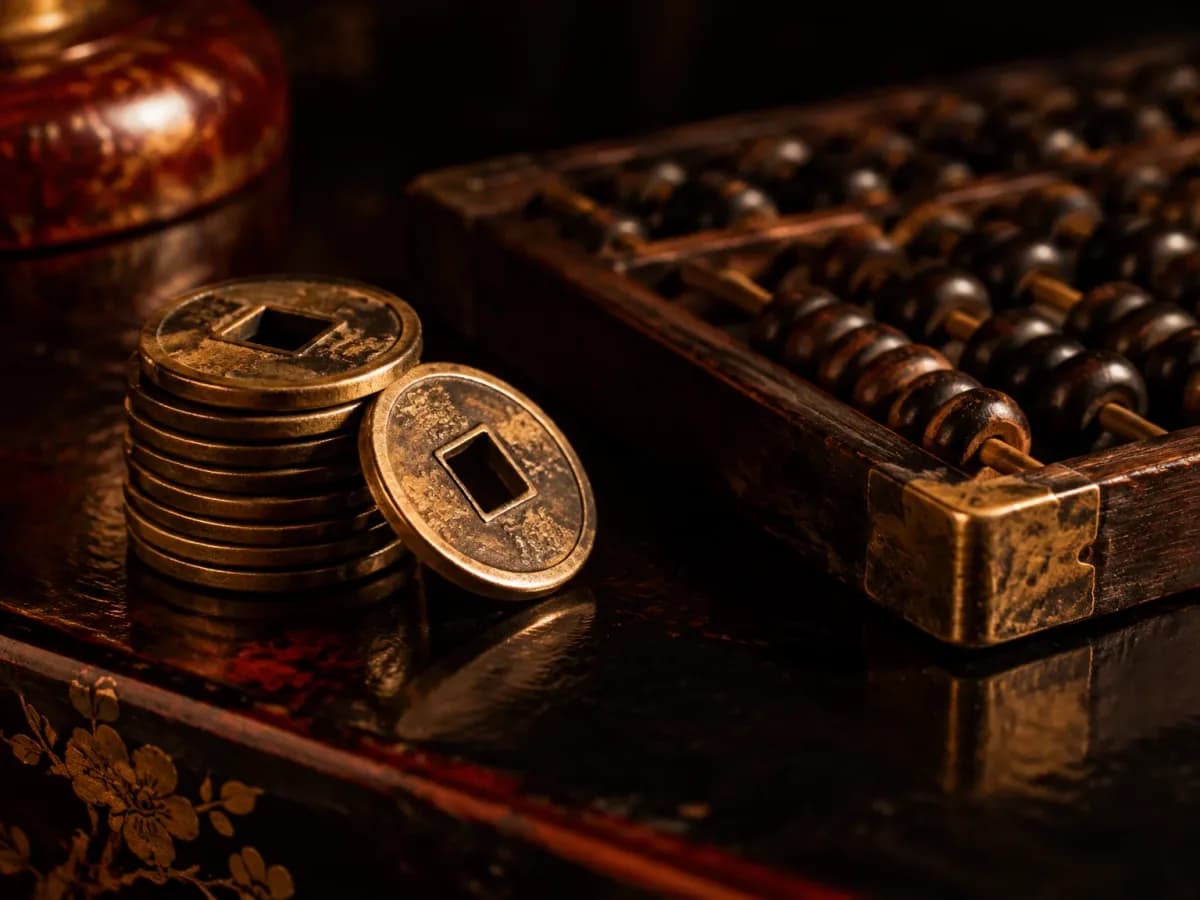
Sustainable prosperity in Zi Wei Dou Shu always pairs fluid cash flow in the Wealth Palace with disciplined asset retention in the Property Palace.
The role of Tian Fu and Tai Yin inside the Property Palace
When Tian Fu resides in the Property Palace without being hollowed out by Cycle Void (Tuần) or Path-Severing Void (Triệt) markers or by Di Kong and Di Jie, the individual prioritizes asset security, prudent debt ratios, and steady real estate acquisition. Similarly, when a bright Tai Yin occupies the Property Palace at You, Xu, Hai, or Zi and converges with Zuo Fu (Tả Phụ), You Bi (Hữu Bật), and Lu Cun, the chart holder typically builds a durable portfolio of properties and long-term holdings that appreciate steadily over time.
3. Which major wealth patterns are most celebrated in classical Zi Wei texts?
Standing at the forefront of classical literature is Wu Qu and Tian Fu Convergence at the Zi and Wu palaces, where the direct wealth star Wu Qu shares a palace with the treasury star Tian Fu. A second celebrated configuration is Tai Yin at Hai, known as Bright Moon at Heaven's Gate, or the Twin Luminaries in Brilliance (Nhật Nguyệt Tịnh Minh) pattern shining into the Life Palace and Wealth Palace, enabling the native to build affluence through strategic vision, public credibility, and institutional trust.
A third dynamic formation is Wu Qu and Tan Lang Alignment at Chou and Wei, along with Tan Lang and Huo Xing Convergence, where Tan Lang meets Huo Xing or Ling Xing. Beyond pure wealth stars, the charts of successful business founders consistently feature supportive pairs such as Zuo Fu and You Bi, Tian Kui (Thiên Khôi) and Tian Yue (Thiên Việt), alongside Hua Quan (Hóa Quyền), which represent capable executive teams, helpful mentors, and systematic operational authority.
> Note: Avoid assuming that the presence of Di Kong, Di Jie, or Po Jun (Phá Quân) in the Wealth Palace makes financial success impossible. When these breakthrough stars sit at Gained brightness under the governance of stable major stars, they indicate an ability to pioneer uncontested market niches and innovative business models, provided the individual enforces strict profit-taking discipline and locks gains into secure reserves.
4. How do you distinguish the four primary wealth-building styles on a chart?
By examining the dominant star groupings across the Three Harmonies and Four Cardinal Positions (tam phương tứ chính) of the Life Palace and Wealth Palace, readers can identify four distinct wealth-building archetypes. The first is wealth through organizational governance and capital allocation, represented by the Emperor-Treasury-General Alignment (Tử Phủ Vũ Tướng), which thrives in corporate leadership, banking, and structured asset management.
The second archetype is wealth through specialized expertise and intellectual capital, represented by the Strategist-Moon-Harmony-Mentor Pattern (Cơ Nguyệt Đồng Lương) converging with Wen Chang, Wen Qu, Hua Ke (Hóa Khoa), and Hua Lu, typical of senior advisors, researchers, and domain specialists. The third is wealth through production, engineering, and market pioneering, represented by the Vanguard-Breaker-Desire Triad (Sát Phá Tham) at Gained brightness meeting Lu Cun, Tian Ma, Huo Xing, or Ling Xing. The fourth is wealth through branding, communication, and public service, seen in charts led by Tai Yang (Thái Dương) and Tai Yin or Zi Wei (Tử Vi) with Tan Lang.
5. How do decade cycles turn natal financial potential into real assets?
Possessing strong wealth indicators in the static natal chart is a necessary foundation, yet the sufficient catalyst lies in the sequence of ten-year decade cycles. When an individual enters a decade cycle hosting Wu Qu, Tian Fu, or Tai Yin at Temple or Prosperous brightness, or one that activates Twin Prosperity Convergence, favorable market timing and commercial partnerships align to multiply the return on disciplined effort.
Conversely, tracking decade cycles also teaches business owners when to shift from expansion to capital defense. When an upcoming ten-year period brings multiple drain and friction stars into the Wealth Palace and Property Palace, a prudent operator reduces leverage, avoids overextended ventures, and focuses on safeguarding the core assets accumulated during prior growth cycles.
Key points
- A prosperous Zi Wei chart highlights Wu Qu, Tai Yin, Tian Fu, Lu Cun, and Hua Lu in key palaces.
- Always evaluate both the Wealth Palace (active cash flow) and the Property Palace (retained net worth).
- Classic wealth configurations include Wu Qu with Tian Fu, Tai Yin at Hai, and Twin Prosperity Convergence.
- Matching your career strategy to your star group and pacing investments by decade cycles are essential.
Want to see which financial pattern governs your Wealth Palace and Property Palace and which decade cycles favor long-term asset building? You can generate your personal Zi Wei chart for free for a detailed lookup based on your birth date and hour.
Frequently asked questions
Can a chart with a Wealth Palace empty of major stars still achieve strong wealth?
Yes, certainly. When a Wealth Palace Without Major Stars (Vô Chính Diệu) receives bright convergence and opposition from Tai Yin, Tai Yang, Tian Fu, Wu Qu, Lu Cun, and Hua Lu across its linked palaces, cash flow and earning capacity remain highly robust.
Between a strong Wealth Palace and a strong Property Palace, which one retains more wealth over time?
A strong Property Palace retains net worth more durably over the long run, because the Wealth Palace governs circulating cash flow and revenue turnover, whereas the Property Palace crystallizes earnings into real estate, equity, and permanent reserves.
How do Lu Cun and Hua Lu differ in financial interpretation?
Lu Cun carries a steady, conservative, and methodical quality that favors disciplined saving and asset protection, whereas Hua Lu is fluid and expansive, opening new revenue streams through commerce, marketing, and collaborative ventures.
Can someone with a wealthy natal chart build riches without study and disciplined work?
No. Wealth stars on a natal chart represent financial aptitude, commercial sensitivity, and resource management habits; they only crystallize into real-world net worth when activated through consistent work, continuous learning, and lawful business practice.
Sources
- La Hong Tien, Complete Compendium of Purple Star Astrology: Sections on major wealth patterns, Wu Qu and Tian Fu convergence, Prosperity and Steed in Motion, and verses on the Wealth and Property Palaces.
- Vân Đằng Thái Thứ Lang, New Compendium of Purple Star Astrology: Chapters analyzing the financial characteristics of Wu Qu, Tai Yin, Tian Fu, and Lu Cun.
- Nguyễn Phát Lộc, Comprehensive Zi Wei Synthesis: Discussion of the structural interplay among the Wealth Palace, Career Palace (cung Quan Lộc), and Property Palace across decade cycles.