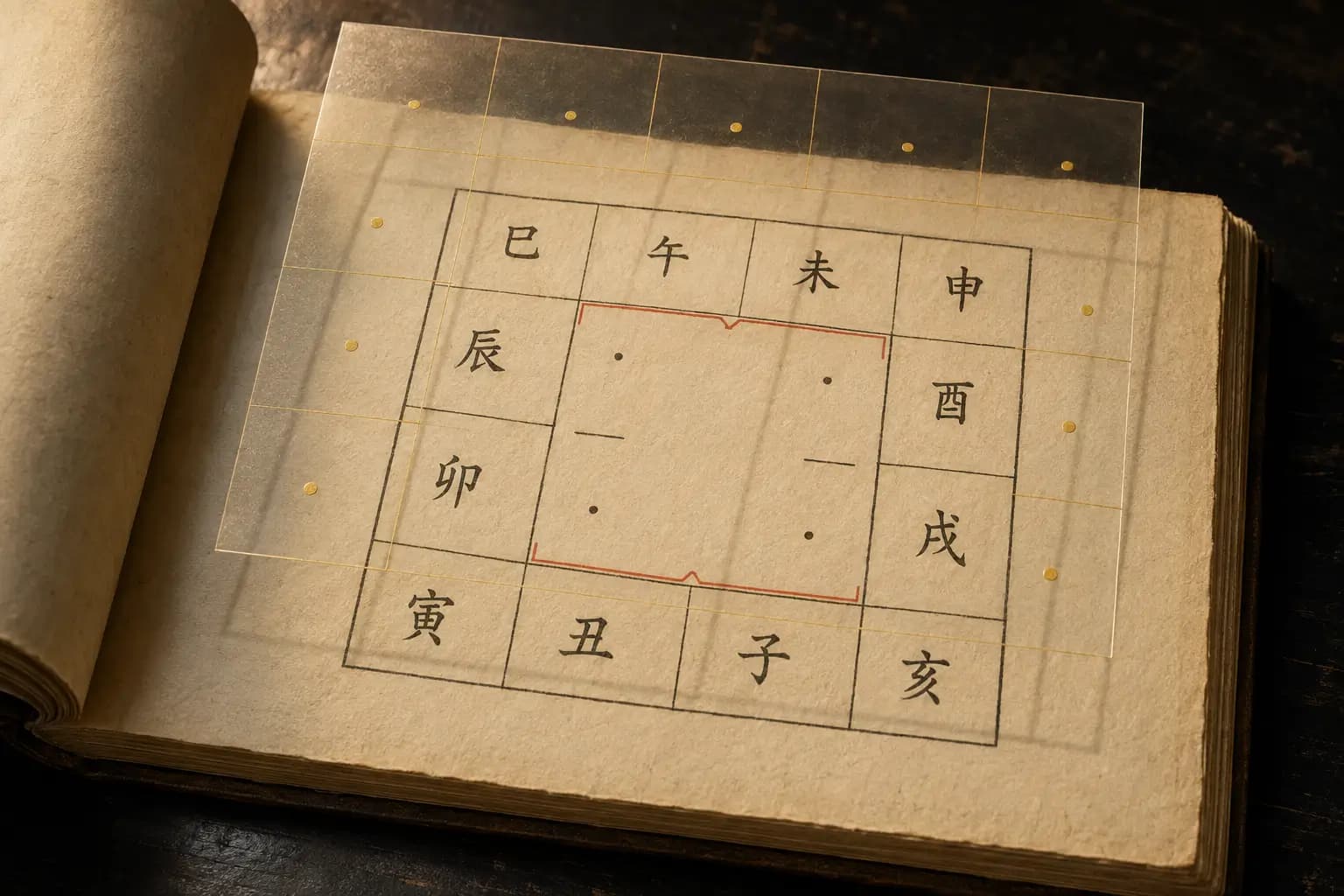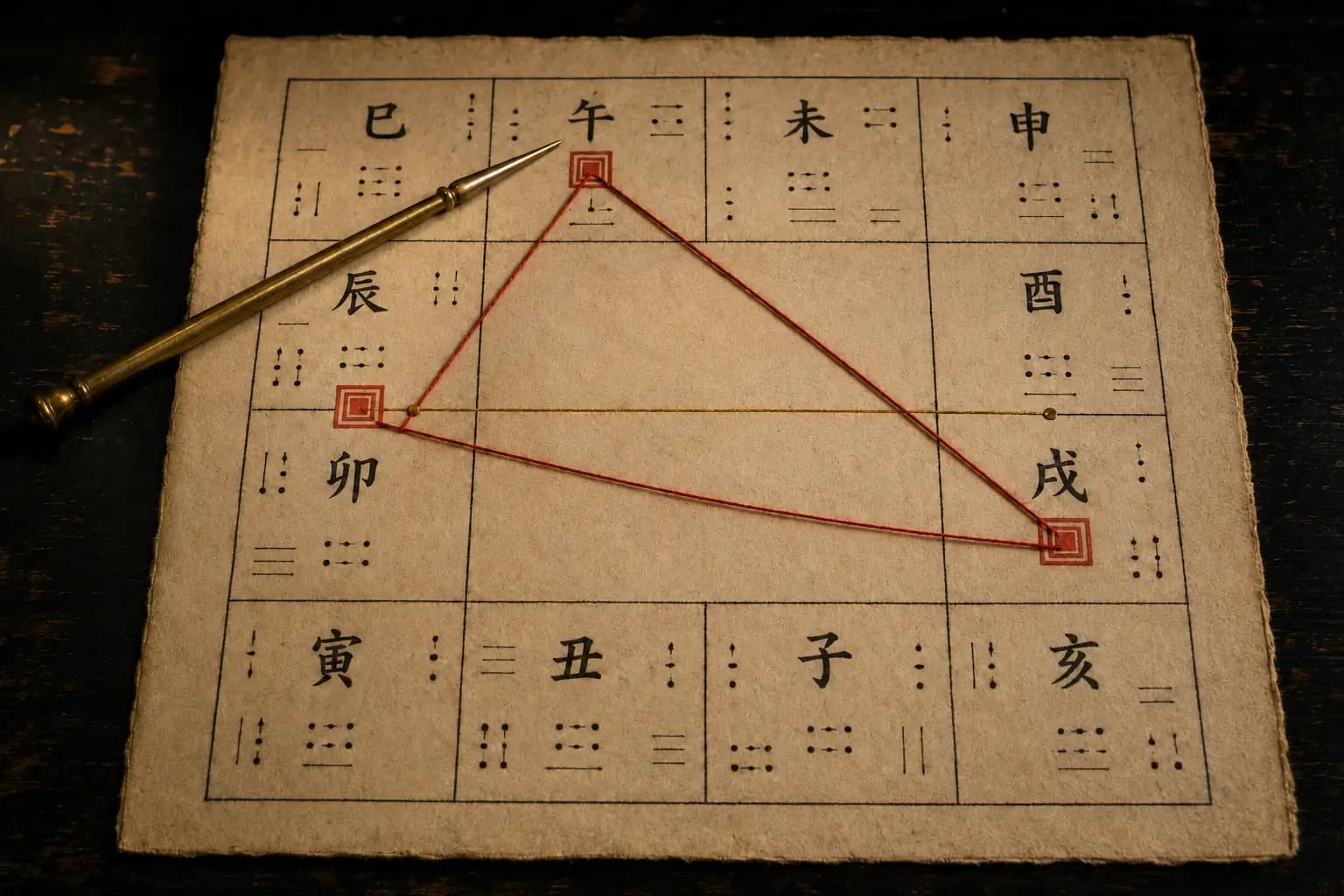
A lifetime Zi Wei chart (lá số Tử Vi trọn đời) is a twelve-palace natal diagram calculated from a person's complete lunisolar calendar (âm lịch) birth year, month, day, birth hour, and gender. This Zi Wei chart (lá số Tử Vi) maps innate temperament, key life relationships, and the sequential timeline of ten-year decade cycle (đại vận) periods across a lifetime.
1. How does a lifetime Zi Wei chart differ from folk zodiac lifetime readings?
When searching online for a lifetime reading, most people first encounter folk almanac articles titled along the lines of "Lifetime Horoscope for Jia-Zi Male Birth Year". Right from the opening stage of beginner Zi Wei Dou Shu study, it is essential to distinguish clearly between these two very different traditions that share a similar everyday name.
Conflating a general birth-year animal sign summary with a full Purple Star Astrology (Tử Vi Đẩu Số) chart is the primary reason many readers wonder why popular almanac descriptions feel vague and disconnected from their real-life circumstances.
| Comparison Criterion | Folk Birth-Year Almanac Reading | Lifetime Zi Wei Chart in Purple Star Astrology |
|---|---|---|
| Input data required | Uses only 2 parameters: lunar birth year and gender. | Uses all 5 parameters: lunar year, month, day, birth hour, and gender. |
| Degree of personalization | Millions of people born in the same year share 1 identical text. | Hundreds of thousands of distinct chart structures differentiated by birth hour. |
| Analytical foundation | Based on birth-year Na Yin Five Elements (Ngũ hành nạp âm), trigram, and folk verse. | Based on 12 functional palaces, 14 major star (chính tinh) placements, and over 90 auxiliary star (phụ tinh) placements. |
| Life-stage segmentation | Offers broad remarks on early, middle, and later life. | Divides life into exact 10-year decade cycles starting from the Bureau number (ages 2-6). |
| Practical purpose | Light cultural reading during Lunar New Year gatherings. | In-depth analysis of personal strengths, career direction, and long-term planning. |
The limitations of readings based solely on the birth-year zodiac animal
In popular folk handbooks, a "lifetime horoscope by age" relies purely on the sexagenary cycle (can chi) of the lunar birth year combined with gender. That means everyone born in the same lunar year reads the exact same pre-written passage. Because it omits the birth month, birth day, and double-hour, a birth-year booklet cannot explain why peers of the same age have very different careers and family paths.
The individualized depth of a Purple Star Astrology natal chart
By contrast, an authentic lifetime Zi Wei chart in Zi Wei Dou Shu requires all five birth inputs: year, month, day, birth hour, and gender. Shifting the birth time by just one two-hour Earthly Branch (địa chi) window moves the Life Palace (cung Mệnh) and redistributes every star across the twelve cells. To understand how this twelve-palace grid works, see our foundational guide on what a Zi Wei chart is.
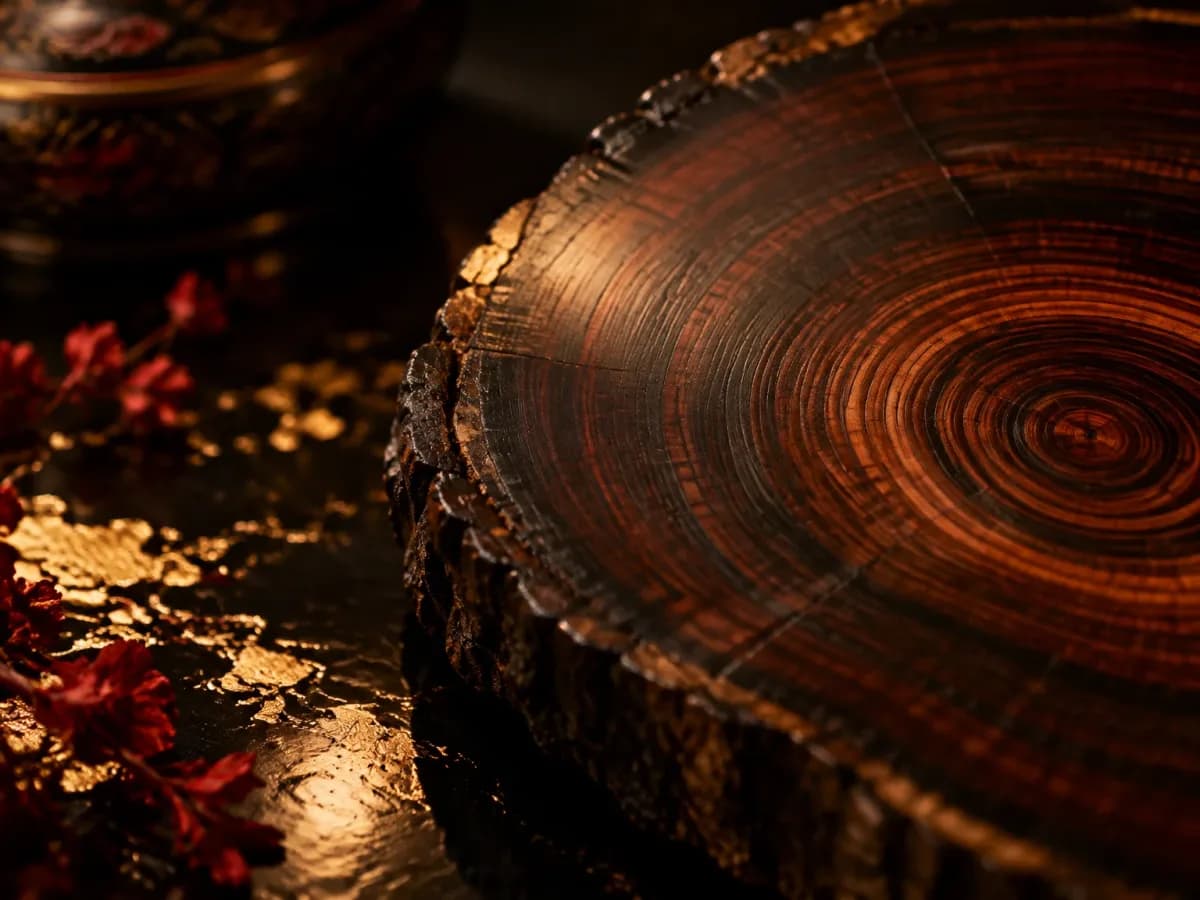
A lifetime Zi Wei chart records each successive ten-year chapter of development like concentric growth rings expanding outward from the core of an ancient tree.
2. What sections make up a complete lifetime Zi Wei chart interpretation?
When reading a lifetime chart from the big picture down to fine details, practitioners do not read the twelve cells mechanically around the border. Instead, a complete lifetime analysis is structured into four major parts, moving from the "static root" (innate potential) to the "dynamic flow" (how timing unfolds across decades).
Parts 1 and 2: Core temperament (Life, Body, and Bureau) and the Career and Wealth axis
The opening section focuses on the central Heaven Plate (Thiên bàn) summary box and the core Life Palace, Body Palace, and Bureau framework to identify natural strengths and post-thirty priorities after the Body Palace (cung Thân) activates. Next, the second section examines the economic axis across four key palaces. These are the Career Palace (cung Quan Lộc) for working style, the Wealth Palace (cung Tài Bạch) for cash-flow management, the Property Palace (cung Điền Trạch) for long-term asset accumulation, and the Travel Palace (cung Thiên Di) for social environment.
Parts 3 and 4: Family and relationship axes and the timeline of 10-year decade cycles
The third section surveys personal relationships across the Fortune Palace (cung Phúc Đức), the Spouse Palace (cung Phu Thê), and the Children Palace (cung Tử Tức). It also checks the Parents Palace (cung Phụ Mẫu), the Siblings Palace (cung Huynh Đệ), and the Friends Palace (cung Nô Bộc), which reflects colleagues and collaborators. Finally, the fourth section analyzes the continuous sequence of ten-year decade cycles from youth through old age, acting as a terrain map for each ten-year chapter of life.
3. What is the 5-step process for reading a lifetime Zi Wei chart from root to branch?
To read your own chart coherently without getting lost among more than a hundred star names, you can follow the five sequential steps below. This workflow is distilled from our complete handbook on how to read a Zi Wei chart according to traditional Southern School standards.
Step 1: Inspect the Heaven Plate foundation and Yin-Yang and Five Elements balance
First, check the lunisolar birth date and hour in the central Heaven Plate box and read two baseline indicators. You verify whether Yin-Yang (âm dương) is aligned or unaligned, and how the natal chart (bản mệnh) Five Elements (ngũ hành) interact with the Five-Element Bureau (Ngũ hành cục). At the same time, note the Bureau number (2, 3, 4, 5, or 6) to know the starting age of your first decade cycle and whether your cycles move clockwise or counterclockwise around the Earth Plate (Địa bàn).
Steps 2 and 3: Analyze the Three Harmonies and Four Cardinal Positions of the Life and Body Palaces
In Step 2, locate the Life Palace, check the brightness of its resident major stars, and connect it with the opposing Travel Palace. Then link it with the Wealth Palace and Career Palace in the Three Harmonies (Tam hợp) triad across the Three Harmonies and Four Cardinal Positions (tam phương tứ chính) to identify the primary chart pattern. In Step 3, locate the cell marked <Body> for comparison: if the Life Palace faces early tests but the Body Palace is bright, middle and later life remain very solid.
Steps 4 and 5: Read the functional palace axes and overlay the decade cycle timeline
Step 4 examines the functional palace axes: Fortune, Travel, and Spouse for family well-being; Children, Property, Parents, and Friends for assets and networks; and the Health Palace (cung Tật Ách). Step 5 places that static natal picture into the moving stream of decade cycles and annual minor cycles on a Zi Wei chart according to the 10-year age brackets printed at the bottom of each palace cell.
> Note: When reading a lifetime Zi Wei chart, avoid looking for a rigid, predetermined fate. A chart reflects your natural behavioral tendencies and the alternating rhythm of favorable and challenging seasons; your personal discipline and real-world decisions ultimately shape the quality of your life in every decade.
4. How are Early Life, Middle Life, and Later Life read on a Zi Wei chart?
In everyday language, people often refer to three overarching stages of life: Early Life (Tiền vận), Middle Life (Trung vận), and Later Life (Hậu vận). On a lifetime Zi Wei chart, these three chapters correspond directly to the progression of the 10-year decade cycles across successive sectors of the Earth Plate.
Early Life (Before age 30): Planting seeds and forging personal identity
Across the first two decade cycles (under lunar age thirty), the chart holder is focused on acquiring knowledge and practical experience. If the early decade-cycle palaces encounter Cycle Void, Path-Severing Void, or malefic stars, early friction actually helps young adults forge strong personal discipline before entering their thirties.
Middle Life (Ages 30 to 55) and Later Life (After age 55): Harvesting results and inner peace
Crossing age thirty into Middle Life, the Body Palace begins operating alongside the Life Palace to drive career development and asset building. Once the chart holder enters Later Life (after age fifty-five), the primary focus shifts toward the Property Palace, Children Palace, and Fortune Palace; a harmonious Fortune Palace serves as the best foundation for a peaceful senior life.
5. How can you apply a lifetime Zi Wei chart to practical life planning?
The greatest practical value of reading a lifetime Zi Wei chart lies not in passively waiting for luck, but in cultivating self-understanding and timing management.
Align your professional environment with your natal star group
Each major star group across the Life, Wealth, and Career triad has its own natural arena of excellence. The Emperor-Treasury-General Alignment (Tử Phủ Vũ Tướng) excels in organizational leadership and finance. Meanwhile, the Strategist-Moon-Harmony-Mentor Pattern (Cơ Nguyệt Đồng Lương) thrives in planning, research, and education, whereas the Vanguard-Breaker-Desire Triad (Sát Phá Tham) performs best in pioneering business or hands-on technical execution.
Synchronize your pace of action with the 10-year decade cycle
When you enter a favorable 10-year decade cycle, its major stars sit in Temple (Miếu) or Prosperous (Vượng) brightness and meet Hua Lu, the Prosperity Transformation (Hóa Lộc), Hua Quan, the Authority Transformation (Hóa Quyền), and Hua Ke, the Reputation Transformation (Hóa Khoa). During such decades, you can confidently expand your work scope and accept new responsibilities. Conversely, when entering a decade cycle with heightened volatility, the wise strategy is prioritizing financial safety and deepening core professional quality.
Key points
- A lifetime Zi Wei chart is constructed from five complete inputs: lunar birth year, month, day, birth hour, and gender.
- The standard reading sequence moves from the Heaven Plate and Life-Body-Bureau core to the 12 palaces and 10-year decade cycles.
- Early Life hones skills, Middle Life activates the Body Palace, and Later Life relies on the Fortune and Property Palaces.
- Reading a lifetime chart helps you recognize your core strengths and pace your actions across each decade.
Would you like to explore the full 12-palace blueprint and the timeline of 10-year decade cycles calculated from your exact birth date and hour? You can generate your personal Zi Wei chart for free to receive an accurate star chart and detailed palace-by-palace interpretation.
Frequently asked questions
Once I read my lifetime Zi Wei chart, do I still need to check annual readings each year?
A lifetime chart provides your overarching natal blueprint and 10-year decade cycles, but each year you should still cross-check the annual transit (lưu niên) and Annual Transit Tai Sui (Lưu niên Thái Tuế) alongside the annual minor cycle (tiểu vận) to fine-tune short-term plans.
If my natal Life Palace looks challenging, does that mean my entire life will be difficult?
Not at all. In Zi Wei (Tử Vi) chart analysis, if the natal Life Palace has early challenges but the Body Palace is favorable and the decade cycles from ages 25 to 55 are bright, you can still build a solid and rewarding career.
Should parents read a lifetime Zi Wei chart for a newborn or young child?
Reviewing a chart from the perspective of innate temperament and natural aptitudes helps parents choose supportive educational methods and nurture the child's strengths appropriately.
Why do two people born in the same lunar year start their 10-year decade cycles at different ages?
The starting age of the first decade cycle (from lunar age 2 to 6) depends on the Five-Element Bureau number, which changes according to where the Life Palace is placed based on each person's birth month and birth hour.
Sources
- Vân Đằng Thái Thứ Lang, Revised Zi Wei Dou Shu: Methodology for overall chart interpretation from the natal blueprint through decade cycles and annual minor cycles.
- Chen Tuan (Trần Đoàn, Hi Di), Complete Compendium of Zi Wei Dou Shu: Classical principles on combining innate chart structure with temporal transit cycles.
- Nguyễn Phát Lộc, Comprehensive Zi Wei Synthesis: Analytical sequence for the 12 functional palaces and the shifting focus across life stages.