What are Hoàng Đạo and Hắc Đạo days? In the traditional East Asian lunisolar calendar (âm lịch), an auspicious day (Hoàng Đạo) is governed by one of six favorable celestial guardians (Azure Dragon, Bright Hall, Golden Coffer, Heavenly Virtue, Jade Hall, or Life Arbiter), while an inauspicious day (Hắc Đạo) corresponds to the remaining six cautionary guardians across the twelve Earthly Branches.
1. Which astronomical principle gave rise to the concept of Hoàng Đạo?
The concept of an auspicious day originates from the ecliptic, the apparent annual path of the Sun across the twelve celestial stations of the sky. In Sino-Vietnamese etymology, "Hoàng" means radiant golden yellow like sunlight, while "Đạo" means a path, way, or orbital track.
In classical astronomy and auspicious day and hour selection studies, the term Hoàng Đạo originally denoted the ecliptic plane along which the Sun appears to travel through the twelve zodiacal mansions over the course of a solar year. Because wherever the Sun moves, warmth and daylight spread across the earth, ancient calendar makers borrowed the image of this sunlit path to name the cycle of favorable days within each lunar month.
The alternating cycle of 6 Hoàng Đạo guardians and 6 Hắc Đạo guardians
To evaluate the seasonal character of each day inside a lunar month, traditional astronomers established a twelve-part rotation of calendar guardians that take turns presiding over the days in the exact sequence of the twelve Earthly Branches from Zi through Hai. Within those twelve positions, exactly six guardians carry a constructive, supportive quality known as an auspicious day (traditionally marked with a red circle on printed calendars), while the other six carry a restrictive, cautionary quality known as an inauspicious day (Hắc Đạo) (marked with a dark dot).
The six guardians that define an auspicious day are Azure Dragon (dynamic initiative and fresh momentum), Bright Hall (openness, clarity, and transparency), and Golden Coffer (steady resource accumulation and financial safekeeping). The remaining three favorable guardians are Heavenly Virtue (also called Precious Light, Bảo Quang, representing family goodwill and moral support), Jade Hall (favorable for study, scholarship, and opening an office), and Life Arbiter (domestic peace, repair, and orderly upkeep). Conversely, the six guardians of an inauspicious day are Heavenly Punishment (Thiên Hình), Vermilion Bird (Chu Tước), White Tiger (Bạch Hổ), Heavenly Prison (Thiên Lao), Black Tortoise (Huyền Vũ), and Hooked Array (Câu Trận), which remind people to stay composed, review paperwork carefully, and avoid hasty legal disputes.
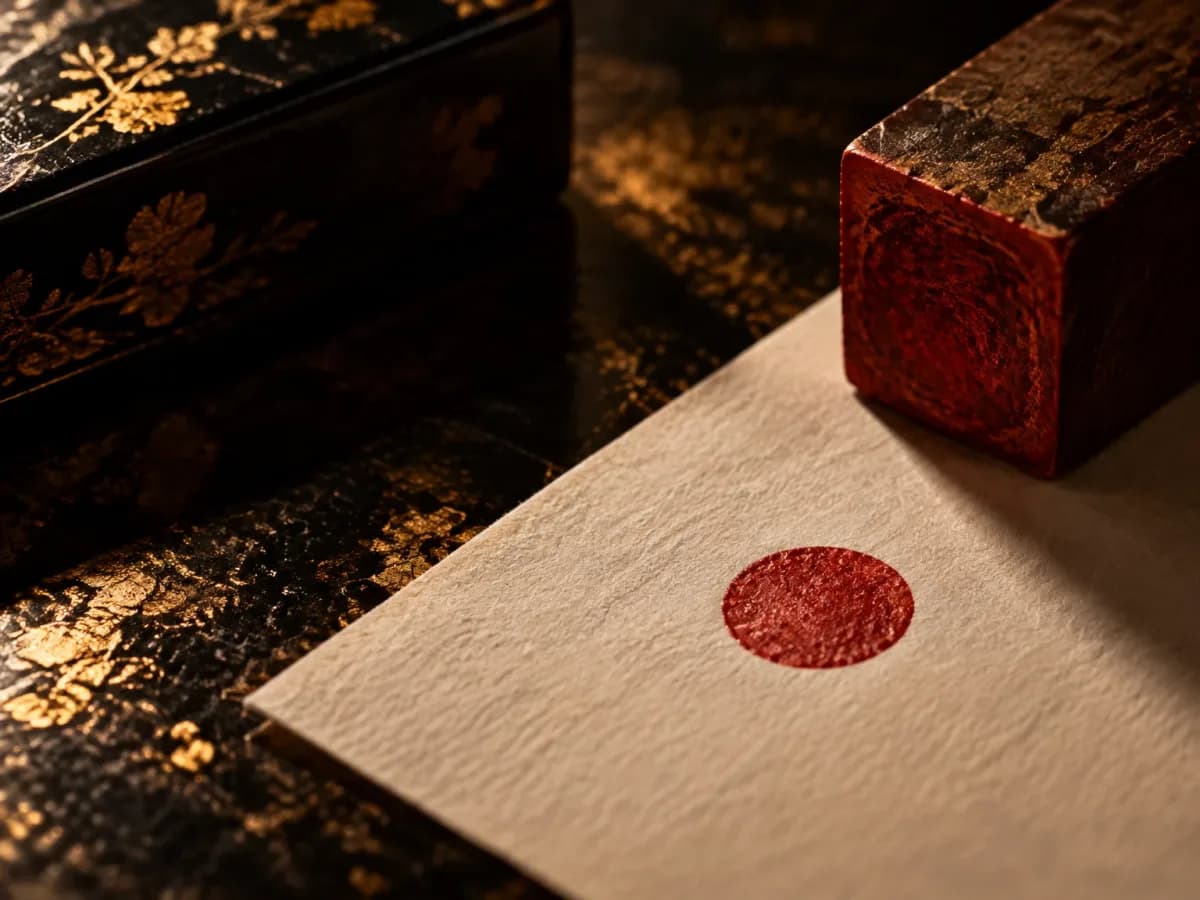
On traditional Vietnamese tear-off calendars, an auspicious day is always marked with a bright red vermilion dot for quick recognition.
2. How is the lookup table of auspicious days across the 12 lunar months calculated?
The auspicious days of any lunar month are fixed by pairing opposite lunar months that share identical Earthly Branch starting anchors, specifically Months 1 and 7, Months 2 and 8, Months 3 and 9, Months 4 and 10, Months 5 and 11, and Months 6 and 12. Once you know the lunar month and the Earthly Branch of a calendar date, you can immediately identify which guardian governs that day.
You can look up the day's Earthly Branch directly in the standard table below or use our check auspicious dates to check which favorable guardian presides over your planned date.
| Lunar Month Pair | Azure Dragon | Bright Hall | Golden Coffer | Heavenly Virtue | Jade Hall | Life Arbiter |
|---|---|---|---|---|---|---|
| Months 1 & 7 (Yin & Shen) | Zi Day | Chou Day | Chen Day | Si Day | Wei Day | Xu Day |
| Months 2 & 8 (Mao & You) | Yin Day | Mao Day | Wu Day | Wei Day | You Day | Zi Day |
| Months 3 & 9 (Chen & Xu) | Chen Day | Si Day | Shen Day | You Day | Hai Day | Yin Day |
| Months 4 & 10 (Si & Hai) | Wu Day | Wei Day | Xu Day | Hai Day | Chou Day | Chen Day |
| Months 5 & 11 (Wu & Zi) | Shen Day | You Day | Zi Day | Chou Day | Mao Day | Wu Day |
| Months 6 & 12 (Wei & Chou) | Xu Day | Hai Day | Yin Day | Mao Day | Si Day | Shen Day |
Reference list of the 6 corresponding inauspicious days for each month pair
The remaining six Earthly Branch days in each lunar month pair correspond to the six cautionary inauspicious day guardians:
- Months 1 & 7: Yin (Heavenly Punishment), Mao (Vermilion Bird), Wu (White Tiger), Shen (Heavenly Prison), You (Black Tortoise), Hai (Hooked Array).
- Months 2 & 8: Chen (Heavenly Punishment), Si (Vermilion Bird), Shen (White Tiger), Xu (Heavenly Prison), Hai (Black Tortoise), Chou (Hooked Array).
- Months 3 & 9: Wu (Heavenly Punishment), Wei (Vermilion Bird), Xu (White Tiger), Zi (Heavenly Prison), Chou (Black Tortoise), Mao (Hooked Array).
- Months 4 & 10: Shen (Heavenly Punishment), You (Vermilion Bird), Zi (White Tiger), Yin (Heavenly Prison), Mao (Black Tortoise), Si (Hooked Array).
- Months 5 & 11: Xu (Heavenly Punishment), Hai (Vermilion Bird), Yin (White Tiger), Chen (Heavenly Prison), Si (Black Tortoise), Wei (Hooked Array).
- Months 6 & 12: Zi (Heavenly Punishment), Chou (Vermilion Bird), Chen (White Tiger), Wu (Heavenly Prison), Wei (Black Tortoise), You (Hooked Array).
What Is an Inauspicious Day (Hắc Đạo)?
What is a Hắc Đạo day? A Hắc Đạo (inauspicious) day is one of the six cautionary days alternating with the six Hoàng Đạo days in each lunar month, presided over by Heavenly Punishment, Vermilion Bird, White Tiger, Heavenly Prison, Black Tortoise, and Hooked Array. Everyday work and study proceed normally, while traditional etiquette advises against rushing major milestones or unreviewed agreements.
| Hắc Đạo Guardian | Traditional Focus | Activities to Postpone |
|---|---|---|
| Heavenly Punishment (Thiên Hình) | Strictness and legal friction | Avoid lawsuits, paperwork disputes, or formal filings |
| Vermilion Bird (Chu Tước) | Verbal misunderstandings | Avoid tense negotiations or rushed contract signings |
| White Tiger (Bạch Hổ) | Physical strain and travel pressure | Avoid heavy groundbreaking or unprepared long travel |
| Heavenly Prison (Thiên Lao) | Administrative delays | Avoid store grand openings or large project launches |
| Black Tortoise (Huyền Vũ) | Oversight and asset leakage | Avoid large undocumented financial transfers |
| Hooked Array (Câu Trận) | Boundary and property friction | Avoid real estate closing or roof-beam ceremonies |
3. How are auspicious hours calculated within a single day?
Within every twenty-four-hour day, divided into twelve traditional double-hours of two Gregorian hours each, the exact same twelve-guardian cycle rotates by the day's Earthly Branch to produce six auspicious hours (giờ Hoàng Đạo) and six cautionary hours. Just as opposite lunar months share the same auspicious days, opposite day branches share the exact same six auspicious hours.
Specifically, the auspicious hours of any day depend entirely on the Earthly Branch of that day (following the exact same pairing pattern as the monthly table: Yin and Shen days share the same auspicious hours as Lunar Months 1 and 7).
| Day Earthly Branch Pair | 6 Auspicious Hours (Branch Names) | Corresponding Clock Time Windows |
|---|---|---|
| Yin Day & Shen Day (Dần & Thân) | Zi, Chou, Chen, Si, Wei, Xu (Tý, Sửu, Thìn, Tỵ, Mùi, Tuất) | 23:00-01:00, 01:00-03:00, 07:00-09:00, 09:00-11:00, 13:00-15:00, 19:00-21:00 |
| Mao Day & You Day (Mão & Dậu) | Yin, Mao, Wu, Wei, You, Zi (Dần, Mão, Ngọ, Mùi, Dậu, Tý) | 03:00-05:00, 05:00-07:00, 11:00-13:00, 13:00-15:00, 17:00-19:00, 23:00-01:00 |
| Chen Day & Xu Day (Thìn & Tuất) | Chen, Si, Shen, You, Hai, Yin (Thìn, Tỵ, Thân, Dậu, Hợi, Dần) | 07:00-09:00, 09:00-11:00, 15:00-17:00, 17:00-19:00, 21:00-23:00, 03:00-05:00 |
| Si Day & Hai Day (Tỵ & Hợi) | Wu, Wei, Xu, Hai, Chou, Chen (Ngọ, Mùi, Tuất, Hợi, Sửu, Thìn) | 11:00-13:00, 13:00-15:00, 19:00-21:00, 21:00-23:00, 01:00-03:00, 07:00-09:00 |
| Zi Day & Wu Day (Tý & Ngọ) | Shen, You, Zi, Chou, Mao, Wu (Thân, Dậu, Tý, Sửu, Mão, Ngọ) | 15:00-17:00, 17:00-19:00, 23:00-01:00, 01:00-03:00, 05:00-07:00, 11:00-13:00 |
| Chou Day & Wei Day (Sửu & Mùi) | Xu, Hai, Yin, Mao, Si, Shen (Tuất, Hợi, Dần, Mão, Tỵ, Thân) | 19:00-21:00, 21:00-23:00, 03:00-05:00, 05:00-07:00, 09:00-11:00, 15:00-17:00 |
> Note: A calendar date marked as an auspicious day satisfies only the general monthly baseline. To choose a date truly tailored to an individual, always verify that the day's Earthly Branch does not form a Six Clashes (Lục xung) opposition with your birth year, and avoid overlapping with Three Ladies (Tam Nương) and Monthly Taboo (Nguyệt Kỵ) days or Master-Afflicting Days (Ngày Sát Chủ) by month and season.
4. Why are some auspicious days suited to one activity but not another?
Different auspicious days suit different activities because each date is simultaneously governed by one of the Twelve Day Officers (Thập Nhị Kiến Trừ), which defines the specific operational nature of that day. If you look closely at a traditional perpetual calendar, you will notice that alongside the six auspicious guardians, every date also carries one of twelve Day Officers: Establish, Remove, Full, Balance, Stable, Initiate, Break, Danger, Accomplish, Harvest, Open, or Close (Kiến, Trừ, Mãn, Bình, Định, Chấp, Phá, Nguy, Thành, Thu, Khai, Bế).
When an Azure Dragon, Bright Hall, or Jade Hall auspicious day coincides with the Open, Accomplish, or Full officer, the combined energy is outward-facing and expansive, making it ideal when you are selecting a grand opening date for a business or signing commercial partnership agreements. Conversely, when a Golden Coffer, Heavenly Virtue, or Life Arbiter auspicious day pairs with the Stable or Balance officer, the emphasis shifts toward long-term domestic stability, which suits weddings, family gatherings, or moving into a new home.
5. What is the 3-step process for selecting an auspicious day for busy people?
Busy planners can select an appropriate auspicious day in three concise steps: filter out major monthly taboo dates, retain dates governed by one of the six favorable guardians, and pick a daytime auspicious hour on a date whose Earthly Branch harmonizes with the host's birth year. Following this structured sequence turns traditional date selection into a fast, practical scheduling checklist.
First, mark your target week on the calendar and cross out Monthly Taboo dates (the 5th, 14th, and 23rd of the lunar month), Three Ladies dates, and the monthly Master-Afflicting Day. Second, keep the remaining dates governed by one of the six favorable guardians in Section 2 and choose a date whose Earthly Branch is harmonious or neutral with the primary host's birth year. Finally, avoid any day that stands in direct Six Clashes opposition to your natal zodiac sign and schedule the main ceremony during a daytime auspicious hour.
Key points
- An auspicious day is a date governed by 1 of the 6 favorable celestial guardians rotating through each lunar month.
- Every lunar month always contains 6 auspicious day branches and 6 inauspicious day branches.
- Every 24-hour day also contains 6 two-hour auspicious hours determined by the day's Earthly Branch.
- Practical date selection combines an auspicious day with avoiding Six Clashes against the host's birth year.
Choosing a well-timed date builds confident momentum at the start of a project, while long-term outcomes also align with the personal decade cycle (đại vận) and annual transit (lưu niên) in Purple Star Astrology (Tử Vi Đẩu Số). You can generate a free personal Zi Wei chart to explore your complete Zi Wei chart (lá số Tử Vi) timeline.
Frequently asked questions
How many auspicious days are there in a typical lunar month?
Because exactly six of the twelve rotating Earthly Branches in every lunar month belong to the favorable guardians (half of the 12-day cycle), any lunar month of 29 or 30 days will always contain 14 to 15 auspicious days.
Are auspicious days calculated from the lunar calendar or the Gregorian calendar?
Auspicious days are calculated from the interplay between the lunar month's Earthly Branch (aligned with the solar term (tiết khí) and lunisolar calendar) and the daily Earthly Branch cycle. You should therefore look them up on a traditional perpetual calendar or a dedicated lunisolar calendar converter.
Should you use an auspicious day if its Earthly Branch clashes with your birth year?
In classical date-selection methodology, harmony with the primary host's birth year takes precedence over a general monthly label. If a date is marked as an auspicious day but its Earthly Branch forms a direct Six Clashes opposition with your natal zodiac animal, it is best to pick another auspicious day in the same week that does not clash with your birth year.
Can nighttime auspicious hours be used for opening a store or moving house?
From a practical standpoint, events that involve public guests, clear visibility, and heavy logistics, such as a store grand opening or moving furniture into a new home, should prioritize daytime auspicious hours (between 05:00 and 17:00). Choosing daytime hours supports physical well-being, neighborhood convenience, and smooth coordination.
Sources
- Xie Ji Bian Fang Shu (Treatise on Harmonizing Times and Distinguishing Directions, Hiệp Kỷ Biện Phương Thư): Chapters on the Twelve Auspicious and Inauspicious Guardians and rules for selecting Azure Dragon and Bright Hall hours.
- Ngọc Hạp Thông Thư (Jade Box Almanac): Tabular charts of auspicious days and hours across the twelve lunar months from Yin through Chou.
- Vietnamese Perpetual Calendar (Lịch Vạn Niên Việt Nam) reference cross-checking the Twelve Day Officers (Thập Nhị Kiến Trừ).