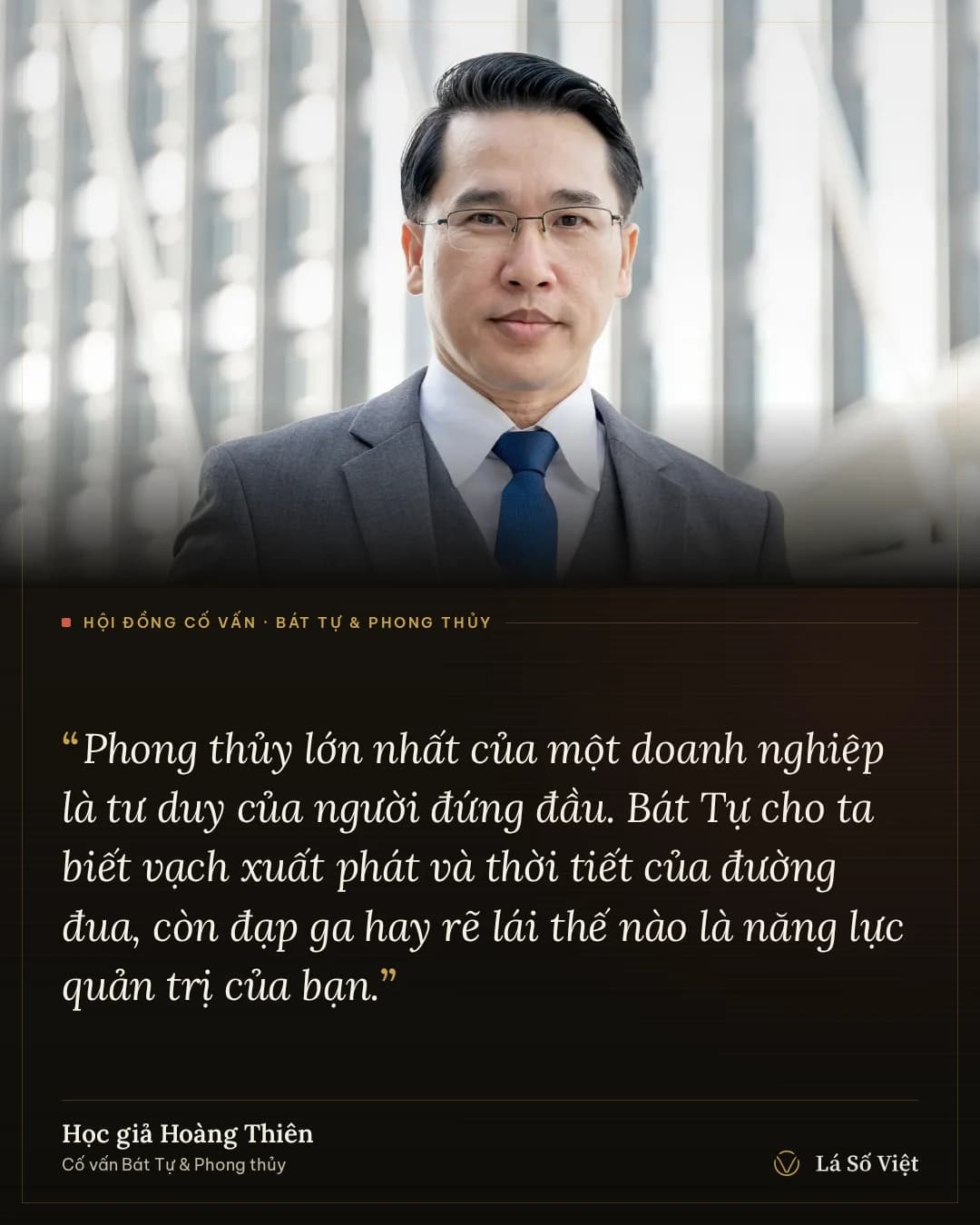






Portrait of Scholar Hoàng Thiên, Bazi and Feng Shui Advisor at Lá Số Việt

Bazi · Feng Shui

From architectural blueprints to Bazi

Scholar Hoàng Thiên connects Eastern five-element analysis with modern management, adjusting space and daily action rather than ritual ceremonies.

Scholar Hoàng ThiênBazi and Feng Shui Advisor

Scholar Hoàng Thiên

Bazi and Feng Shui Advisor

Discipline
Bazi, I Ching, Feng Shui
Hometown
Hải Phòng
Based in
Ho Chi Minh City
Education
Architect, University of Architecture Ho Chi Minh City. Master of Business Administration (MBA)
Further study
Hong Kong and Taiwan

Background at a glance

  • Graduated in Architecture from the University of Architecture Ho Chi Minh City.
  • Holds a Master of Business Administration (MBA).
  • Trained in Hong Kong and Taiwan in Flying Star Feng Shui and Zi Ping Bazi.
  • Improves momentum through spatial layout and concrete decisions, never ritual offerings.

The Journey

An architect who turned to Bazi (Four Pillars) and Feng Shui, linking classical Eastern calculation with spatial design and organizational thinking.

I.From Hải Phòng to the South

Born in Hải Phòng, he moved south with his family as a child, earning his degree in Architecture in Ho Chi Minh City before completing graduate study in Business Administration.

II.What blueprints leave unwritten

While designing large commercial projects, he noticed how timing and spatial flow shaped the rise and strain of businesses. A blueprint records dimensions, materials, and circulation, yet says nothing about timing or which role fits a founder.

That question led him to classical Eastern calculation.

Bazi is the baseline map of a life; Feng Shui is how we read airflow, light, and living space
Scholar Hoàng Thiên

III.Hong Kong and Taiwan

He traveled to Hong Kong and Taiwan to study Flying Star Feng Shui and Zi Ping Bazi, later returning to Ho Chi Minh City as an independent advisor.

Hong Kong harbor skyline at night

IV.The minimalist walnut desk

His desk stays spare: a wide monitor showing architectural floor plans beside Bazi charting software, a bronze luopan compass, and a notebook of five-element structures.

Traditional bronze compass on a dark wooden desk
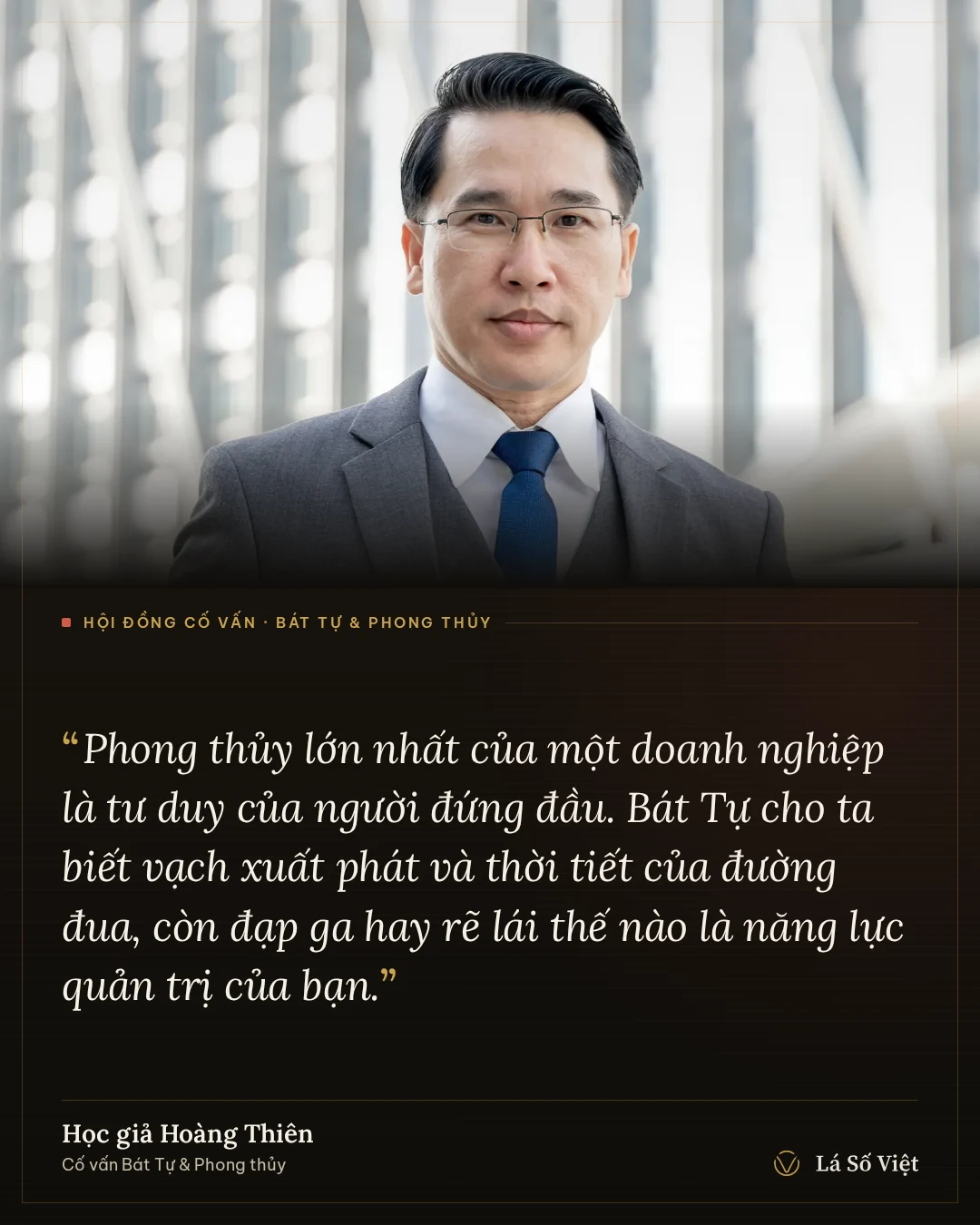
The greatest Feng Shui of any enterprise is the mindset of its leader. Bazi reveals the starting line and weather on the track; how you steer and brake belongs to your management skill.
Scholar Hoàng ThiênBazi and Feng Shui Advisor

How they work

He reads Bazi to spot natural strengths and seasons requiring caution, then advises on workspace layout, timing, and suitable organizational roles without ever naming investment figures or loan sizes.

Perspective

  • Bazi maps a person's baseline structure; Feng Shui studies how environment and living space support daily focus.
  • Every conclusion rests on yin-yang balance and the generating and controlling cycles of the Five Elements.

Working principles

  • Adjust momentum through practical layout: desk orientation, circulation paths, and visual palette aligned with favorable elements rather than star-offering ceremonies.
  • Maintain an objective, collegial, and transparent advisory tone.
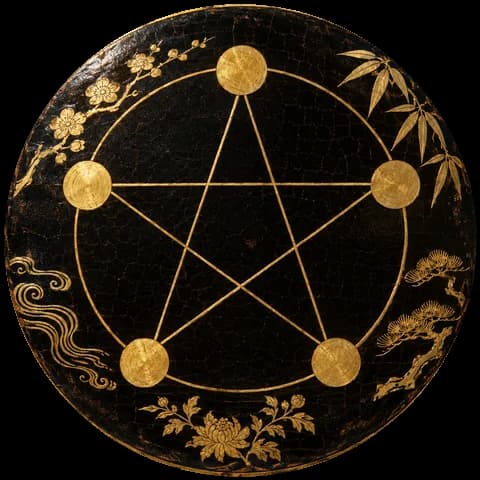
Bronze luopan compass used in classical Feng Shui

Research areas

  • Bazi (Four Pillars)seasonal Five Element balance and ten-year luck pillars.
  • Applied I Chingstructured reflection for organizational decisions.
  • Residential and office Feng Shuicirculation, natural light, desk placement, and auspicious date selection.

Articles by Scholar Hoàng Thiên

Start with the subjects and tools led by this advisor.

BaziFeng Shui

Explore Bazi (Four Pillars)

See how Year, Month, Day, and Hour pillars map your Five Element structure.

Quote card of Scholar Hoàng Thiên

Save this quote card as an image to share.

Fellow Advisory Board Members

Message Lá Số ViệtMessenger support icon for Lá Số Việt