Standing second in the Zi Wei ring, Tian Ji (Thiên Cơ) represents analytical thinking, strategic planning, adaptability, and how you weigh options before acting.
Tian Ji is the second major star (chính tinh) placed counterclockwise immediately after Zi Wei (Tử Vi) in Purple Star Astrology (Tử Vi Đẩu Số). Associated with Yin Wood in the Five Elements (ngũ hành), this star reflects learning through observation, comparing multiple options, and adjusting workflows dynamically. When reading Tian Ji on a Zi Wei chart (lá số Tử Vi). In addition, always weigh its brightness across the twelve Earthly Branches (địa chi) alongside companions such as Tai Yin (Thái Âm), Ju Men (Cự Môn), and Tian Liang (Thiên Lương).
What is Tian Ji and what role does it play in the Zi Wei ring?
When placing the fourteen major stars onto the twelve Earthly Branch cells, Tian Ji always sits one cell counterclockwise behind Zi Wei. If Zi Wei acts as the central coordinator that sets overarching direction, Tian Ji serves as the analytical planner that turns goals into step-by-step procedures. Its exact cell depends directly on where Zi Wei lands after calculating the Five-Element Bureau (Ngũ hành cục).
In terms of Yin-Yang (âm dương) and the Five Elements, classical manuals assign Tian Ji to Yin Wood, though minor interpretive nuances vary by lineage. The Wood nature of Tian Ji symbolizes continuous mental movement, curiosity, and connecting pieces of information. People with a prominent Tian Ji usually want to understand why a process works before executing it.
However, the name Tian Ji is not an automatic badge of genius or a rule restricting you to a single profession. Its core strength is responsiveness to new information and preparing backup plans in advance. Conversely, its main pitfall is overthinking too many possibilities at once without locking in a final decision, which can lead to mid-course hesitation.
How does Tian Ji brightness vary across the 12 Earthly Branches?
Across the twelve Earthly Branch cells, Tian Ji reaches Temple (Miếu) brightness at Zi and Wu, and Prosperous (Vượng) brightness at Mao and You. It stands at Gained (Đắc) at Yin and Shen, favorable at Chen and Xu, and Neutral (Bình) at Si and Hai. At Chou and Wei, Tian Ji drops to Fallen (Hãm), with minor school variations noted across historical texts.
When Tian Ji occupies Temple, Prosperous, or Gained cells, structured analysis and orderly adaptation come naturally. You find it easy to organize scattered ideas into actionable schedules and incorporate practical feedback. By contrast, when Tian Ji sits at Neutral in Si or Hai or Fallen in Chou or Wei, juggling too many mental threads can drain your focus.
Even so, how to read a Zi Wei chart never isolates a single star's brightness from its Three Harmonies and Four Cardinal Positions (tam phương tứ chính). At Chou or Wei, Tian Ji still gains strong support when joined by Wen Chang (Văn Xương), Wen Qu (Văn Khúc), Zuo Fu (Tả Phụ), or You Bi (Hữu Bật). Adding Hua Ke — Reputation Transformation (Hóa Khoa) and written deadlines keeps this placement grounded.
Key formations: Solo placements, Ji-Yin, Ji-Ju, Ji-Liang, and the Strategist-Moon-Harmony-Mentor Pattern
Across the twelve palaces, Tian Ji sits alone in six branches: Zi, Chou, Si, Wu, Wei, and Hai. In solo placements, independent observation and a habit of researching solutions from first principles stand out clearly. You prefer verifying facts yourself, though sharing your reasoning early helps teammates follow your train of thought.
At Yin and Shen, Tian Ji shares a palace with Tai Yin to form the Ji-Yin pairing, blending analytical planning with quiet financial and emotional sensitivity. At Mao and You, Tian Ji pairs with Ju Men to form the Ji-Ju combination. That pairing sharpens critical inquiry, comparative research, and clarifying ambiguous clauses.
At Chen and Xu, Tian Ji shares a palace with Tian Liang, uniting flexible tactics with principled mentorship and process standardization. More broadly, when Tian Ji, Tai Yin, Tian Tong (Thiên Đồng), and Tian Liang converge across the Three Harmonies (Tam hợp), they form the Strategist-Moon-Harmony-Mentor Pattern (Cơ Nguyệt Đồng Lương). This classical alignment favors structured institutions, steady skill accumulation, and collaborative governance.
How to read Tian Ji in the Life, Career, Wealth, and Spouse Palaces
When Tian Ji occupies the Life Palace (cung Mệnh) within the Life Palace, Body Palace, and Bureau framework, your hallmark trait is mental agility. Joined by auxiliary stars (phụ tinh) like Tian Kui (Thiên Khôi) or Tian Yue (Thiên Việt), your ability to structure and explain complex ideas shines. If Huo Xing (Hỏa Tinh), Ling Xing (Linh Tinh), Qing Yang (Kình Dương), Tuo Luo (Đà La), or Hua Ji — Friction Transformation (Hóa Kỵ) appears, finish one task first.
In the Career Palace (cung Quan Lộc) among the twelve palaces in a Zi Wei chart, Tian Ji suits roles centered on systems analysis, project planning, research, or workflow coordination. You thrive when improving processes and solving multi-variable problems. Avoid taking on too many parallel side projects so your primary deliverables stay sharp.
In the Wealth Palace (cung Tài Bạch), Tian Ji shows that cash flow is closely tied to specialized knowledge, problem-solving skills, and timely adaptation. You prefer rotating capital through active plans rather than leaving resources idle. This works well when Hua Lu — Prosperity Transformation (Hóa Lộc) or Hua Quan — Authority Transformation (Hóa Quyền) supports the triad, alongside fixed budgeting rules.
In the Spouse Palace (cung Phu Thê), Tian Ji highlights intellectual companionship and listening to each other's perspectives in marriage. Instead of keeping worries inside and over-analyzing small gestures, turn questions into calm, direct conversations. Mutual respect for each partner's learning interests keeps the household warm.
How does Tian Ji read across the remaining eight palaces?
In the Children Palace (cung Tử Tức) and Parents Palace (cung Phụ Mẫu), Tian Ji favors open dialogue and patient curiosity across generations. In the Siblings Palace (cung Huynh Đệ) and Friends Palace (cung Nô Bộc), peers bring diverse specialties and cooperate best under clear schedules. In the Fortune Palace (cung Phúc Đức) and Health Palace (cung Tật Ách), an active mind benefits from regular evening rest.
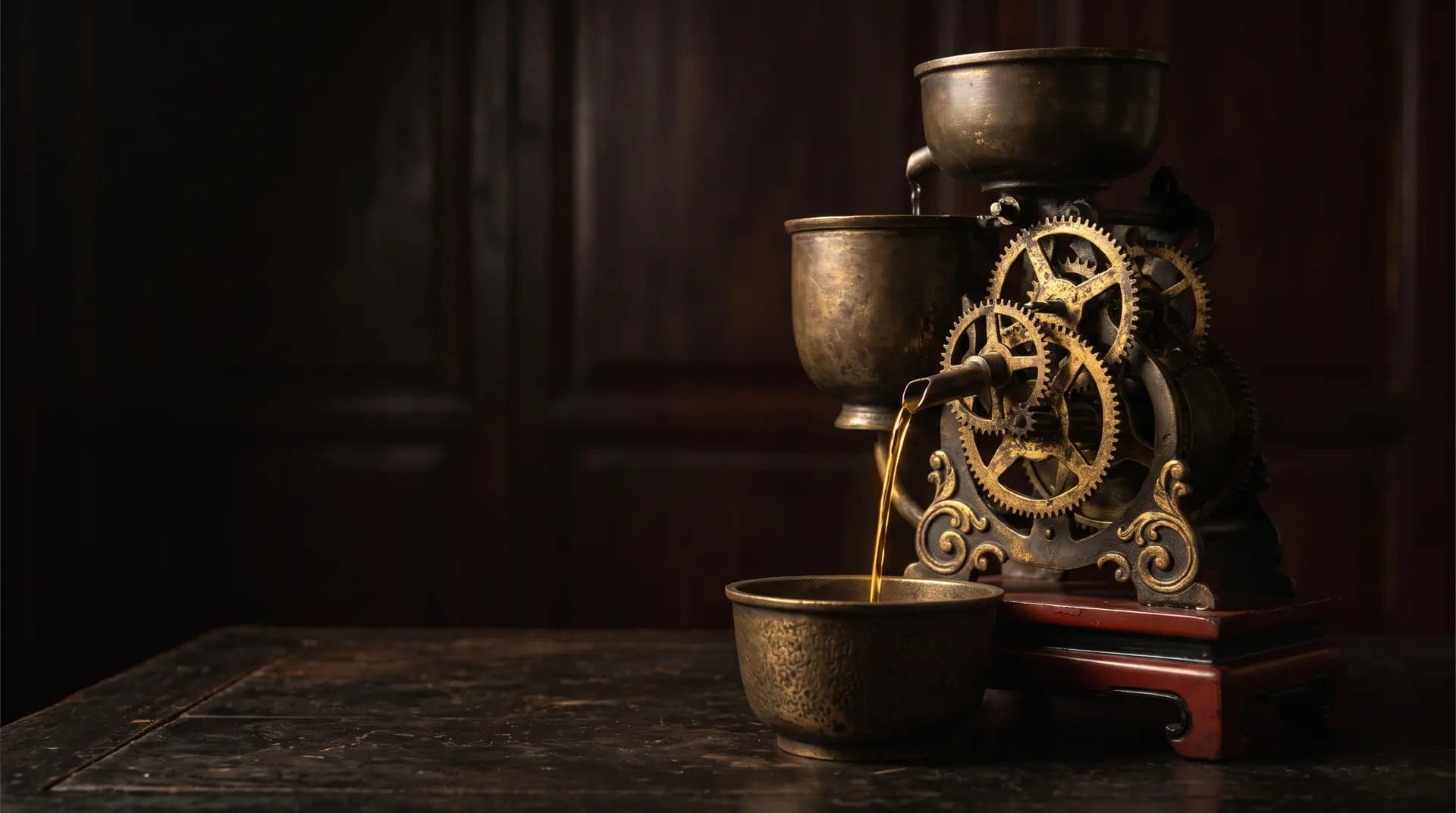
In the Property Palace (cung Điền Trạch) and Travel Palace (cung Thiên Di), Tian Ji points toward practical workspace layouts and quick adaptation when traveling. A frequent misconception is equating the character Ji with manipulative scheming, when classically it simply means a pivot or mechanism. Review your decade cycles (đại vận), annual minor cycle (tiểu vận), and annual transit (lưu niên) on the Zi Wei chart generator. Also inspect your natal chart (bản mệnh), Body Palace (cung Thân), and Four Transformations (Tứ Hóa) there.
Common misconceptions and key takeaways when reading this star
- Star of observation and planning: Seated right after Zi Wei, Yin Wood Tian Ji represents analytical thinking, continuous learning, and tactical flexibility.
- Distinct solo and paired patterns: Stands solo in six branches and pairs with Tai Yin (Yin, Shen), Ju Men (Mao, You), and Tian Liang (Chen, Xu).
- Turn analysis into finished steps: Operates best when multi-angle planning is paired with clear deadlines and consistent follow-through.
Frequently Asked Questions
What element does Tian Ji belong to and where does it sit in the Zi Wei ring?
Tian Ji belongs to Yin Wood in the Five Elements (varying slightly by lineage) and always sits immediately counterclockwise after Zi Wei in the northern star ring.
In which Earthly Branches is Tian Ji brightest or Fallen?
Across the twelve branches, Tian Ji reaches Temple brightness at Zi and Wu, Prosperous at Mao and You, Gained at Yin and Shen, Neutral at Si and Hai. Additionally, Fallen at Chou and Wei.
What does the Strategist-Moon-Harmony-Mentor Pattern (Cơ Nguyệt Đồng Lương) mean?
It is the triad convergence of Tian Ji, Tai Yin, Tian Tong. Additionally, Tian Liang across the Three Harmonies and Four Cardinal Positions, highlighting methodical planning, institutional coordination, and steady expertise.
What is the most helpful habit for someone with Tian Ji in the Life Palace?
Because Tian Ji generates many options quickly, the best habit is writing down concrete milestones and finishing one priority before switching to the next.